



| Indications:
Relief of mild to moderate pain and fever. Relief of pain: Headache, toothache, sore throat, musculoskeletal pain, arthritis pain. Relief of fever. Administration, dosage: Administration: For oral use. Dosage: Do not use paracetamol for self-treatment of pain for more than 10 days in adults, more than 5 days in children, or for self-treatment of high fever (over 39.50C), fever lasting more than 3 days, or recurrent fever, unless directed by a doctor. The usual recommended doses are as follows: Adults: 1 to 2 capsules, 3 – 4 times daily (maximum 8 capsules in 24 hours). The interval between doses should be at least 4 hours. Children: Children from 12 to 16 years of age: 1 capsule once. Children from 16 to 18 years of age: 1 – 2 capsules once. Children under 12 years of age should use other appropriate dosage form. Dosage may be repeated every 4-6 hours as needed, but do not exceed 4 doses in 24 hours. Some special attention on the handling of the medicine before and after use: There are no special requirements for handling the drug after use. Contraindications: Hypersensitivity to paracetamol. Warnings and precautions for use: Doctors should inform patients about the signs of serious skin reactions such as Stevens- Johnson Syndrome (SJS), toxic epidermal necrolysis (TEN) or Lyell’s syndrome, and acute generalized exanthematous pustulosis (AGEP). Paracetamol is relatively nontoxic at therapeutic dose. Sometimes, there are skin reactions including pruritus and urticaria; other hypersensitivity reactions including laryngeal edema, angioedema, and anaphylactoid reactions may rarely occur. Thrombocytopenia, leucopenia and pancytopenia have been associated with the use of p-aminophenol derivatives, especially with prolonged administration of large doses. Neutropenia and thrombocytopenic purpura have occurred with paracetamol. Rarely, agranulocytosis is reported in patients using paracetamol. Paracetamol must be used with caution in patients with pre-existing anemia, since cyanosis may not be apparent, despite the dangerously elevated levels of methemoglobin in the blood. Excessive alcohol consumption can increase paracetamol hepatotoxicity; alcohol should be avoided or limited. Patients with recurrent anemia or heart, lung, kidney diseases or severe liver disease. Patients with G-6-PD deficiency. Pregnancy and lactation: Pregnancy: The safety of paracetamol during pregnancy has not been established with regard to possible undesirable effects on fetal development. Therefore, paracetamol should only be used in pregnant women if it is really necessary. Epidemiological studies show that at the recommended dose, paracetamol has no influence on pregnant women; however, it is necessary to follow doctor’s advice. Lactation: No adverse effects were seen in breastfed infants. Paracetamol is excreted in breast milk but in very small amounts which do not affect breastfed infants, current data show that paracetamol use is not contraindicated in breastfeeding women. Effects on ability to drive, use machines: There is no information about the effects of paracetamol on ability to drive and use machine. Interactions, incompatibilities of medicine: Interaction of the drug with other drugs and other types of interactions: Agicedol should not be used concurrently with any other paracetamol-containing products. Long-term use of high doses of paracetamol may mildly enhance the anticoagulant effect of coumarin and indandione derivatives. The possibility of severe hypothermia should be considered in patients receiving concomitantly phenothiazine and antipyretic therapy. Chronic and excessive consumption of alcohol may increase risk of paracetamol-induced hepatotoxicity. Anticonvulsants (including phenytoin, barbiturate, carbamazepine), which induce hepatic microsomal enzyme may increase paracetamol-induced hepatotoxicity due to the increase of drug metabolism to produce liver toxic metabolites. In addition, concurrent use of isoniazid with paracetamol may also lead to an increased risk of hepatotoxicity, but the exact mechanism of this interaction has not yet been determined. Cholestyramine: Reduces absorption rate of paracetamol. Therefore, do not take cholestyramine within one hour after taking paracetamol if you need maximum pain relief. Metoclopramide and domperidone: Increases the absorption rate of paracetamol. However, concurrent administration of these drugs and paracetamol is not recommended to avoid. Chloramphenicol: Plasma chloramphenicol concentrations increase with concomitant use of paracetamol. Incompatibilities: Because there are no studies of drug incompatibility, do not mix this drug with other drugs. Undesirable effects: Serious skin reactions such as Stevens-Johnson syndrome (SJS), Lyell’s syndrome, toxic epidermal necrolysis (TEN), syndrome of acute generalized exanthematous pustulosis (AGEP) may rarely occur, but potentially fatal. If rash or other skin manifestations occur, stop taking the medicine and consult a physician. Skin rash and other allergic reactions have occasionally occurred. Erythema or urticaria are commonly seen. Sometimes, severe side effects occur which may be accompanied by fever and mucosal lesion. If fever, bullae around the natural cavities are observed, Stevens-Johnson syndrome should be considered, stop taking paracetamol immediately. Overdose of paracetamol can lead to severe liver damage and sometimes acute renal tubular necrosis. Patients hypersensitive to salicylate are rarely hypersensitive to paracetamol and related medicines. In isolated cases, paracetamol reduces neutropenia, thrombocytopenia and pancytopenia. Undesirable effects are classified according to frequency: Very common (ADR ≥ 1/10), common (1/100 ≤ ADR < 1/10), uncommon (1/1,000 ≤ ADR < 1/100), rare (1/10,000 ≤ ADR < 1/1,000), very rare (ADR < 1/10,000); cannot be estimated from the available data “Not known”. Uncommon: Skin: Rash. Gastrointestinal tract: Vomiting, nausea. Hematologic: Blood dyscrasia (neutropenia, thrombocytopenia and pancytopenia), anemia. Kidney: Kidney disease, renal toxicity after long-term use. Rare: Other: Hypersensitivity reactions. Inform your doctor if any of the side effects occur when using the medicine. Overdose and management: Overdose: When paracetamol is overdosed, a metabolite called N-acetyl-p-benzoquinone imine (NAPQI), is produced which is toxic to the liver. Paracetamol poisoning may be due to a single toxic dose, or by repeated large doses of paracetamol (e.g, 7.5 – 10 g daily, for 1-2 days), or long-term use. Dose-dependent hepatic necrosis is the most severe acute toxicity due to overdosage and can be fatal. Acute kidney failure also occurs in some people. Symptoms: Nausea, vomiting, and abdominal pain usually occur within 2 to 3 hours after ingestion of toxic dose. Methemoglobinemia causes cyanosis of the skin, mucous membranes, and nails. In case of severe poisoning, it may initially stimulate the central nervous system, causing agitation, and delirium. Then, CNS depression may occur with symptoms of stupor, hypothermia; weariness; rapid, shallow breathing; rapid, weak, irregular pulse; low blood pressure; hyposphyxia. Vascular collapse results from the relative hypoxia and from a central depressant action, this effect occurs only at very large doses. Shock can occur if there is extensive vasodilation. Convulsions associated with suffocation leading to death may occur. Coma usually precedes death, which may occur suddenly or may be delayed for several days. Management: Early diagnosis is very important for the treatment of paracetamol overdose. When heavily poisoned, active supportive treatment is important. Gastric lavage is applied in all cases, preferably within 4 hours after ingestion. Principal detoxification therapy is to use sulfhydryl compounds, which perhaps have its action partially due to supplementing glutathione reserved in the liver. N-acetylcysteine is effective when taken orally or intravenously. Antidote should be used as soon as possible if less than 36 hours after taking paracetamol. If N-acetylcysteine is not available, methionine can be used. Activated charcoal and/or saline laxative can also be used, they may reduce the absorption of paracetamol. Packing: 3, 6, 10-blister box x 10 hard capsules. A plastic bottle box contains 30, 50, 100 hard capsules. A plastic bottle contains 200, 300, 500 hard capsules. Storage conditions, shelf life, quality specification of the medicine: Storage conditions: Protect from humidity and light, below 300C. Shelf life: 36 months from the manufacture date. Once opened, the medicine can be stored under the same conditions and used within 30 days. Quality specification: In house. |
|
D1401001702 |

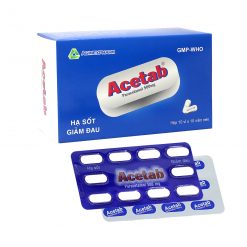


Vui lòng xác nhận bạn là Dược sĩ, Bác sĩ, Chuyên viên y khoa... có nhu cầu tìm hiểu về sản phẩm. Thông tin mô tả tại đây chỉ mang tính chất trợ giúp người đọc hiểu hơn về sản phẩm, không nhằm mục đích quảng cáo. Việc sử dụng thuốc phải tuân theo hướng dẫn của Bác sĩ hoặc Dược sĩ.