Indications:
Azithromycin is indicated in treatment of infections caused by susceptible bacteria; in lower respiratory tract infections including bronchitis and pneumonia; bucco-dental infections; skin and soft tissue infections; acute otitis media and in upper respiratory tract infections including sinusitis, pharyngitis/tonsillitis. (Penicillin is the usual drug of choice in the treatment of pharyngitis due to Streptococcus pyogenes, including the prophylaxis of rheumatic fever. Azithromycin is in general effective against streptococci in the pharyngitis, although data demonstrating the efficacy of azithromycin in prevention of rheumatic fever are not available).
In sexually transmitted diseases in men and women, azithromycin is indicated in the treatment of uncomplicated genital infections due to Chlamydia trachomatis. It is also indicated in the treatment of chancroid due to Haemophilus ducreyi, and uncomplicated genital infection due to non-multiresistant Neisseria gonorrhoea; treatment of concomitant infections with Treponema pallidum is not indicated.
Azithromycin may be used alone or in combination with rifabutin for prophylaxis of Mycobacterium avium-intracellular complex (MAC) infection, an opportunistic infection prevalent in patients with advanced human immunodeficiency virus (HIV).
Azithromycin is indicated in combination with ethambutol for the treatment of disseminated MAC (DMAC) infection in patients with advanced HIV infection.
Administration, dosage:
Administration: Azithromycin should be taken as a single daily dose. Azithromycin may be taken with food or without food. Tablets should be swallowed whole.
Dosage:
Adults: For the treatment of sexually transmitted disease caused by Chlamydia trachomatis, Haemophilus ducreyi, the dose is 1000 mg as single oral dose. For susceptible Neisseria gonorrhoeae, the recommended dose is 1000 mg or 2000 mg of azithromycin in combination with 250 mg or 500 mg ceftriaxone according to clinical treatment guidelines. For patients who are allergic to penicillin and/or cephalosporins, prescribers should consult treatment guidelines.
For prophylaxis of MAC infection: In patients with the human immunodeficiency virus (HIV), the dose is 1200 mg once per week.
For the treatment of DMAC infection: In patients with advanced HIV infection, the recommended dose is 600 mg once a day. Azithromycin should be administered in combination with other antimycobacterial agents that have in vitro activity against MAC, such as ethambutol at the approved dose.
For other indications in which the oral formulation is administered, the total dosage of 1500 mg should be given as 500 mg once daily for 3 days. Alternatively, the same total dose can also be administered over a period of five days with 500 mg on the first day and 250 mg on the second to the fifth day.
Children: The maximum recommended total dose for any treatment in children is 1500 mg.
| Weighing (kg) | 3 – day regimen | 5 – day regimen |
| > 45 | Dose as for adults | Dose as for adults |
Azithromycin tablets should only be administered to children weighing more than 45 kg.
Elderly: The same dose as in adult patients is used. Elderly patients may be more susceptible to development of torsades de pointes arrhythmias than younger patients (see Warnings and precautions).
In patients with renal impairment: No dose adjustment is necessary in patients with mild to moderate renal impairment (GFR 10-80 ml/min). Azithromycin should be used with caution in patients with severe renal impairment (GFR < 10 ml/phút) (see Warnings and precautions for use and Pharmacokinetic properties).
In patients with hepatic impairment: Patients with mild to moderate hepatic impairment use same dosage in patients with normal hepatic function (see Warnings and precautions).
Some special attention on the handling of the medicine before and after use:
There are no special requirements for handling this medicine after use.
Contraindications:
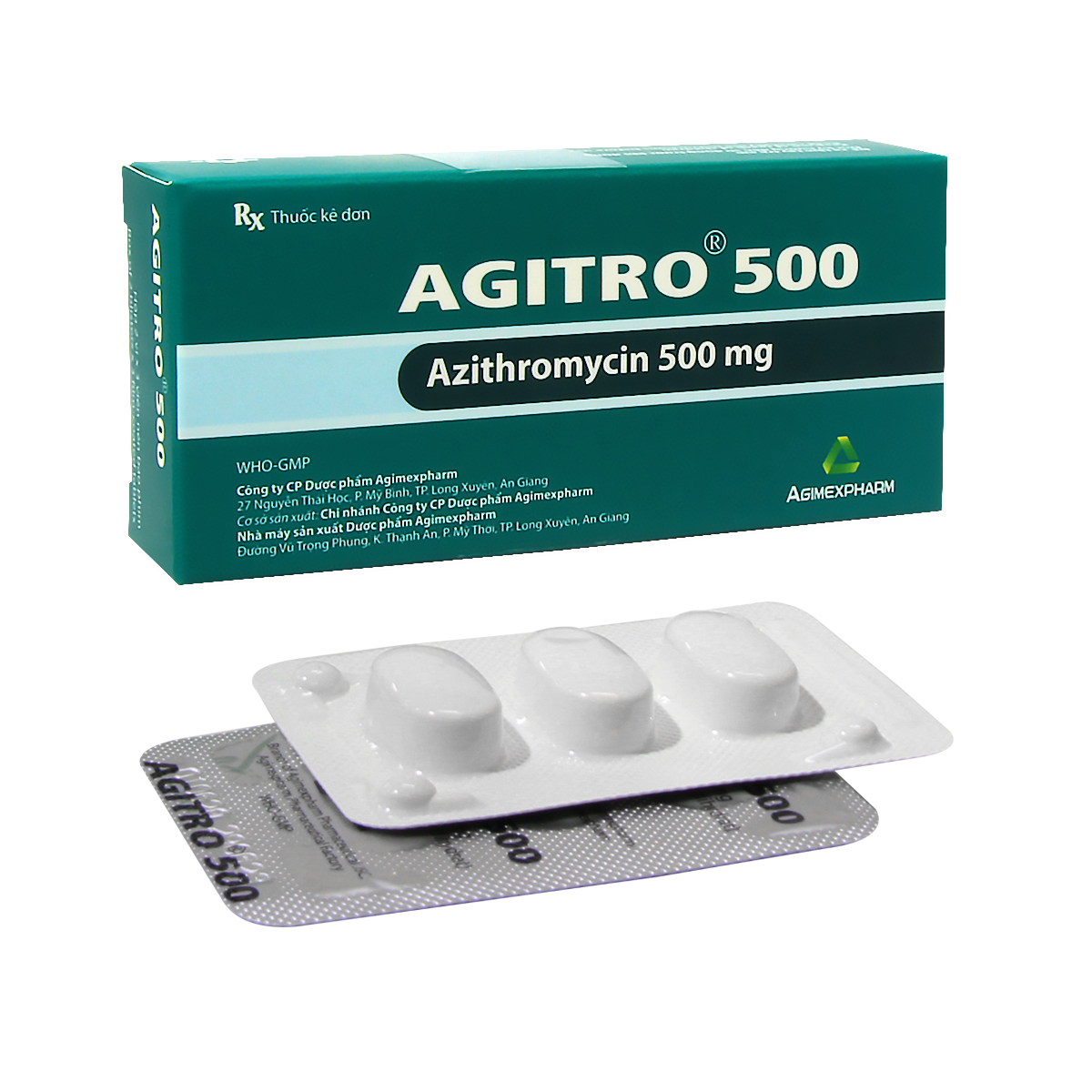
AGITRO 500 is contraindicated in patients with hypersensitivity to azithromycin, erythromycin, with any of the macrolide or ketolide antibiotics, or any of the excipients of the medicine.
Warnings and precautions for use:
Hypersensitivity:
As with erythromycin and other macrolides, rare serious allergic reactions including angioedema and anaphylaxis (rarely fatal), dermatologic reactions including acute generalised exanthematous pustulosis (AGEP), Stevens Johnson syndrome (SJS), toxic epidermal necrolysis (TEN) (rarely fatal) and drug reaction with eosinophilia and systemic symptoms (DRESS) have been reported. Some of these reactions with azithromycin have resulted in recurrent symptoms and required a longer period of observation and treatment.
If an allergic reaction occurs, the medicinal product should be discontinued and appropriate therapy should be instituted. Doctors should be aware that reappearance of the allergic symptoms may occur when symptomatic therapy is discontinued.
Hepatotoxicity: Since liver is the principal route of elimination for azithromycin, the use of azithromycin should be undertaken with caution in patients with severe hepatic disease.
Abnormal liver function, hepatitis, cholestatic jaundice, hepatic necrosis, and hepatic failure have been reported, some of which have resulted in death. Discontinue azithromycin immediately if signs and symptoms of hepatitis occur.
Infantile hypertrophic pyloric stenosis (IHPS): Following the use of azithromycin in the neonates (treatment up to 42 days of life), IHPS has been reported. Parents and caregivers should be informed to contact their physician if vomiting or irritability with feeding occurs.
Ergotamine derivatives: In patients receiving ergotamine derivatives, ergotism has been precipitated by coadministration of some macrolide antibiotics. There are no data concerning the possibility of an interaction between ergotamine derivatives and azithromycin. However, theoretically, ergot poisoning may occur, azithromycin and ergot derivatives should not be coadministered.
Superinfection: As with any antibiotic preparation, observation for signs of superinfection with non-susceptible organisms including fungi is recommended.
Clostridium difficile associated diarrhea: Clostridium difficile associated diarrhea (CDAD) has been reported with the use of nearly all antibacterial agents, including azithromycin, and may range in severity from mild diarrhea to fatal colitis. Treatment with antibacterial agents alters the normal flora of the colon, leading to overgrowth of C. difficile.
- difficile produces toxins A and B which contribute to the development of CDAD. Hypertoxin producing strains of C. difficile cause increased morbidity and mortality, as these infections can be refractory to antibacterial therapy and may require colectomy. CDAD must be considered in all patients who present with diarrhea following antibiotic use. Careful medical history is necessary since CDAD has been reported to occur over two months after the administration of antibacterial agents.
Renal impairment: In patients with severe renal impairment (GFR < 10 ml/min) a 33% increase in systemic exposure to azithromycin was observed (see Pharmacokinetic properties).
Prolongation of QT interval: Prolonged cardiac repolarization and QT interval, imparting a risk of developing cardiac arrhythmia and torsades de pointes, have been seen in treatment with macrolides, including azithromycin (see Undesirable effects). Prescribers should consider the risk of QI prolongation, which can cause fatal, when weighing the risks and benefits of azithromycin for at-risk groups including:
- Patients with congenital or history of acquired QT prolongation.
- Patients currently receiving treatment with other active substances known to prolong QT interval such as antiarrhythmics of class IA and class III; antipsychotic agents, antidepressants and fluoroquinolones.
- Patients with electrolyte disturbance, particularly in cases of hypokalaemia and hypomagnesaemia.
- Patients with clinically relevant bradycardia, cardiac arrhythmia or cardiac insufficiency.
- Elderly patients maybe more sensitive to the effects of the drug on the QT interval.
Myasthenia: Exacerbations of the symptoms of myasthenia have been reported in patients receiving azithromycin therapy.
Lactose: Patients with rare hereditary problems of galactose intolerance, the Lapp lactase deficiency or glucose-galactose malabsorption should not take this medicine.
Pregnancy and lactation:
Pregnancy:
Animal reproduction studies have been performed at doses up to mildly maternally toxic dose concentrations. In these studies, no evidence of harm to the fetus due to azithromycin was found. There are, however, no adequate and well-controlled studies in pregnant women. Because animal reproduction studies are not always predictive of human response, azithromycin should not be used during pregnancy unless clearly necessary.
Lactation:
Azithromycin has been reported to be secreted into human breast milk, but there are no adequate and well-controlled clinical studies in nursing women that have characterized the pharmacokinetics of azithromycin excretion into human breast milk. Azithromycin should be used cautiously in breastfeeding women.
Effects on ability to drive and use machines:
No data are available regarding the influence of azithromycin on a patient’s ability to drive and operate machinery. However, the undesirable effects such as vertigo, convulsions, dazzle, drowsiness and syncope have been reported with azithromycin which may affect the ability to drive and operate machinery.
Interactions, incompatibilities of medicine:
Interaction with other medicinal products and other forms of interaction:
Antacids: In a pharmacokinetic study investigating the effects of simultaneous administration of antacids with azithromycin, no effect on overall bioavailability was seen, although peak serum concentrations were reduced by approximately 24%. In patients receiving both azithromycin and antacids, the drugs should not be taken simultaneously.
Cetirizine: In healthy volunteers, coadministration of a 5-day regimen of azithromycin with 20 mg cetirizine at steady-state resulted in no pharmacokinetic interaction and no significant changes in the QT interval.
Didanosine (Dideoxyinosine): Coadministration of 1200 mg/day azithromycin with 400 mg/day didanosine in 6 HIV-positive subjects did not appear to affect the steady-state pharmacokinetics of didanosine as compared with placebo.
Digoxin: Concomitant administration of macrolide antibiotics, including azithromycin, with P-glycoprotein substrates such as digoxin, has been reported to result in increased serum levels of the P-glycoprotein substrate. Therefore, if azithromycin and P-glycoprotein substrates such as digoxin are administered concomitantly, the possibility of elevated serum digoxin concentrations should be considered. Clinical monitoring, and possibly serum digoxin levels, during treatment with azithromycin and after its discontinuation are necessary.
Ergotamine derivatives (ergot): Theoretically, interaction between azithromycin and ergot derivatives may occur (see Warnings and precautions for use).
Zidovudine: Single 1000 mg doses and multiple 1200 mg or 600 mg doses of azithromycin had little effect on the plasma pharmacokinetics or urinary excretion of zidovudine or its glucuronide metabolite. However, administration of azithromycin increased the concentrations of phosphorylated zidovudine, the clinically active metabolite, in peripheral blood mononuclear cells. The clinical significance of this finding is unclear, but it may be of benefit to patients.
Azithromycin does not interact significantly with the hepatic cytochrome P450 system. It is not believed to undergo the pharmacokinetic drug interactions as seen with erythromycin and other macrolides. Hepatic cytochrome P450 induction or inactivation via cytochrome-metabolite complex does not occur with azithromycin.
Pharmacokinetic studies have been conducted between azithromycin and the following drugs known to undergo significant cytochrome P450 mediated metabolism.
Atorvastatin: Coadministration of atorvastatin (10 mg daily) and azithromycin (500 mg daily) did not alter the plasma concentrations of atorvastatin (based on a HMG CoA-reductase inhibition assay). However, post-marketing cases of rhabdomyolysis in patients receiving azithromycin with statins have been reported.
Carbamazepine: In a pharmacokinetic interaction study in healthy volunteers, no significant effect was observed on the plasma levels of carbamazepine or its active metabolite in patients receiving concomitant azithromycin.
Cimetidine: In a pharmacokinetic study investigating the effects of a single dose of cimetidine, given 2 hours before azithromycin, on the pharmacokinetics of azithromycin, no alteration of azithromycin pharmacokinetics was seen.
Coumarin-type oral anticoagulants: In a pharmacokinetic interaction study, azithromycin did not alter the anticoagulant effect of a single dose of 15 mg warfarin administered to healthy volunteers. There have been reports received in the post-marketing period of potentiated anticoagulation subsequent to coadministration of azithromycin and coumarin type oral anticoagulants. Although a causal relationship has not been established, consideration should be given to the frequency of monitoring prothrombin time when azithromycin is used in patients receiving coumarin type oral anticoagulants.
Cyclosporin: In a pharmacokinetic study with healthy volunteers that were administered a 500 mg/day oral dose of azithromycin for 3 days and were then administered a single 10 mg/kg oral dose of cyclosporin, the resulting cyclosporin Cmax and AUC0-5 were found to be significantly elevated. Consequently, caution should be exercised before considering concurrent administration of these drugs. If coadministration of these drugs is necessary, cyclosporin levels should be monitored and the dose adjusted accordingly.
Efavirenz: Coadministration of a 600 mg single dose of azithromycin and 400 mg efavirenz daily for 7 days did not result in any clinically significant pharmacokinetic interactions.
Fluconazole: Coadministration of a single dose of 1200 mg azithromycin did not alter the pharmacokinetics of a single dose of 800 mg fluconazole. Total exposure and half-life of azithromycin were unchanged by the coadministration of fluconazole, however, a clinically insignificant decrease in Cmax (18%) of azithromycin was observed.
Indinavir: Coadministration of a single dose of 1200 mg azithromycin had no statistically significant effect on the pharmacokinetics of indinavir administered as 800 mg three times daily for 5 days.
Methylprednisolone: In a pharmacokinetic interaction study in healthy volunteers, azithromycin had no significant effect on the pharmacokinetics of methylprednisolone.
Midazolam: In healthy volunteers, coadministration of azithromycin 500 mg/day for 3 days did not cause clinically significant changes in the pharmacokinetics and pharmacodynamics of a single 15 mg dose of midazolam.
Nelfinavir: Coadministration of azithromycin (1200 mg) and nelfinavir at steady state (750 mg three times daily) resulted in increased azithromycin concentrations. No clinically significant adverse effects were observed and no dose adjustment was required.
Rifabutin: Coadministration of azithromycin and rifabutin did not affect the serum concentrations of either drug.
Neutropenia was observed in subjects receiving concomitant treatment of azithromycin and rifabutin. Although neutropenia has been associated with the use of rifabutin, a causal relationship to combination with azithromycin has not been established (see Undesirable effects).
Sildenafil: In normal healthy male volunteers, there was no evidence of an effect of azithromycin (500 mg daily for 3 days) on the AUC and Cmax of sildenafil or its major circulating metabolite.
Terfenadine: Pharmacokinetic studies have reported no evidence of an interaction between azithromycin and terfenadine. There have been rare cases reported where the possibility of such an interaction could not be entirely excluded; however there was no specific evidence that such an interaction had occurred.
Theophylline: There is no evidence of a clinically significant pharmacokinetic interaction when azithromycin and theophylline are co-administered to healthy volunteers.
Triazolam: In 14 healthy volunteers, coadministration of azithromycin 500 mg on Day 1 and 250 mg on Day 2 with 0.125 mg triazolam on Day 2 had no significant effect on any of the pharmacokinetic variables for triazolam compared to triazolam and placebo.
Trimethoprim/sulfamethoxazole: Coadministration of trimethoprim/sulfamethoxazole (160 mg/800 mg) for 7 days with azithromycin 1200 mg on Day 7 had no significant effect on peak concentrations, total exposure or urinary excretion of either trimethoprim or sulfamethoxazole. Azithromycin serum concentrations were similar to those seen in other studies.
Incompatibilities:
Because there are no studies of drug incompatibility, do not mix this drug with other drugs.
Undesirable effects:
The estimated response frequency is ranked by convention: Very common (ADR ≥ 1/10); common (≥ 1/100 to <1/10); uncommon (≥ 1/1,000 to <1/100); rare (≥1/10,000 to <1/1,000); very rare (<1/10,000), unknown (cannot be estimated from the available data).
Azithromycin is well tolerated with the rate of adverse effects is low.
In clinical trials, the following undesirable effects have been reported:
Blood and lymphatic system disorders: Transient episodes of mild neutropenia have occasionally been observed in clinical trials.
Ear and labyrinth disorders: Hearing impairment (including hearing loss, deafness and/or tinnitus) has been reported in some patients receiving azithromycin. Many of these have been associated with prolonged use of high doses of azithromycin in investigative studies.
In those cases where follow-up information was available, the majority of these events were reversible.
Gastrointestinal disorders: Nausea, vomiting, diarrhea, loose stools, abdominal discomfort (pain/spasms), and flatulence.
Hepatobiliary disorders: Hepatic function abnormal.
Skin and subcutaneous tissue disorders: Allergic reactions including rash and angioedema.
The following undesirable effects have been reported in relation to clinical trials of DMAC treatment and prophylaxis:
The most frequent adverse reactions (> 5% in any treatment group) in HIV-infected patients receiving azithromycin for prophylaxis for DMAC were diarrhea, abdominal pain, nausea, loose stools, flatulence, vomiting, dyspepsia, rash, pruritus, headache, and arthralgia.
When azithromycin 600 mg is given daily for the treatment of DMAC infection for prolonged periods, the most frequently reported treatment-related side effects are abdominal pain, nausea, vomiting, diarrhea, flatulence, headache, abnormal vision and hearing impairment.
Post-marketing, the following additional undesirable effects have been reported:
Infections and infestations: Candidiasis and vaginal infection.
Blood and lymphatic system disorders: Thrombocytopenia.
Immune system disorders: Anaphylactic reaction (rarely fatal) (see Warnings and precautions for use).
Metabolism and nutrition disorders: Anorexia.
Psychiatric disorders: Aggresive reaction, nervousness, agitation and anxiety.
Nervous system disorders: Dizziness, convulsions, headache, hyperactivity, hypoaesthesia, paresthesia, drowsiness, and syncope. The changes and/or ageusia/anosmia has been rarely reported.
Ear and labyrinth disorders: Deafness, tinnitus, hearing impaired, vertigo.
Cardiovascular disorders: Palpitations and arrhythmias including ventricular tachycardia have been reported. There have been rare reports of QT prolongation and torsades de pointes (see Warnings and precautions for use).
Vascular disorders: Hypotension.
Gastrointestinal disorders: Vomiting/diarrhea (rarely resulting in dehydration), dyspepsia, constipation, pseudomembranous colitis, pancreatitis, and reports of tongue discoloration (rare).
Hepatobiliary disorders: Hepatitis and cholestatic jaundice have been reported, as well as rare reported of hepatic necrosis and hepatic failure which has rarely resulted in death (see Warnings and precautions for use, hepatotoxicity).
Skin and subcutaneous tissue disorders: Allergic reactions including pruritis, rash, photosensitivity, edema, urticaria and angioedema. Serious skin reactions including erythema multiforme, acute generalized exanthematous pustulosis (AGEP), Stevens-Johnson syndrome (SJS), toxic epidermal necrolysis (TEN) and drug reaction with eosinophilia and systemic symptoms (DRESS) have been rare reported.
Musculoskeletal and connective tissue disorders: Arthralgia.
Renal and urinary disorders: Nephritis interstitial and acute renal failure.
General disorders: Asthenia, fatigue, malaise.
Overdose and management:
Overdose: The undesirable effects when administered in higher than the recommended dose were similar to those seen at normal doses.
Management: In the case of overdosage, general symptomatic and supportive measures are indicated as required.
Pharmacodynamic properties:
Pharmacotherapeutic group: Macrolides.
ATC code: J01FA10
Mechanism of action:
Azithromycin is the first agent of a subclass of macrolide antibiotics, known as azalides and differs chemically from erythromycin. The molecule is constructed by adding a nitrogen atom to the lactone ring of erythromycin A. The chemical name of azithromycin is 9-deoxy-9a-aza-9a-methyl-9a-homoerythromycin A. The molecular weight is 749.0.
Azithromycin binds to the 23S rRNA of the 50s ribosomal subunits. It blocks protein synthesis by inhibiting the transpeptidation/translocation step of protein synthesis and by inhibiting the assembly of the 50S ribosomal subunit.
Cardiac electrophysiology:
QTc interval prolongation was studied in a parallel, randomized, placebo-controlled trial in 116 healthy subjects who received either chloroquine (1000 mg) alone or in combination with oral azithromycin (500 mg, 1000 mg, and 1500 mg once daily). Co-administration of azithromycin increased the QTc interval in a dose- and concentration- dependent manner. In comparison to chloroquine alone, the maximum mean (95% upper confidence bound) increases in QTcF were 5 (10) ms, 7 (12) ms and 9 (14) ms with the co-administration of 500 mg, 1000 mg and 1500 mg azithromycin, respectively.
Mechanism of resistance:
The two most frequently encountered mechanisms of resistance to macrolides, including azithromycin, are target modification (most often by methylation of 23S rRNA) and drug efflux pumps. The occurrence of these resistance mechanisms varies from species to species and, within a species, the frequency of resistance varies by geographical location.
The most important ribosomal modification that determines reduced binding of macrolides is post-transcriptional (N6)-dimethylation of adenine at nucleotide A2058 (Escherichia coli numbering system) of the 23S rRNA by methylases encoded by erm (erythromycin ribosome methylase) genes. Ribosomal modifications often determine cross resistance (MLSB phenotype) to other classes of antibiotics whose ribosomal binding sites overlap those of the macrolides: The lincosamides (including clindamycin), and the streptogramin B (which include, for example, the quinupristin component of quinupristin/dalfopristin). Different erm genes are present in different bacterial species, in particular streptococci and staphylococci. Susceptibility to macrolides can also be affected by less frequently encountered mutational changes in nucleotides A2058 and A2059, and at some other positions of 23S rRNA, or in the large subunit ribosomal proteins L4 and L22.
The efflux pump mechanism occurs in a number of species, including Gram-negatives, such as Haemophilus influenzae (where they may determine intrinsically higher minimal inhibitory concentrations [MICs]) and staphylococci. In streptococci and enterococci, an efflux pump that recognises 14- and 15-membered macrolides (which include, respectively, erythromycin and azithromycin) is encoded by mef (A) genes.
Methodology for determining the in vitro susceptibility of bacteria to azithromycin
Susceptibility testing should be conducted using standardized laboratory methods, such as those described by the Clinical and Laboratory Standards Institute (CLSI). These include dilution methods (MIC determination) and disk susceptibility methods. Both CLSI and the European Committee on Antimicrobial Susceptibility Testing (EUCAST) provide interpretive criteria for these methods.
Based on a number of studies, it is recommended that the in vitro activity of azithromycin be tested in ambient air to ensure physiological pH of the growth medium. Elevated CO2 tensions, as often used for streptococci and anaerobes, and occasionally for other species, result in a reduction in the pH of the medium. This has a greater adverse effect on the apparent potency of azithromycin than on that of other macrolides.
The CLSI susceptibility breakpoints, based on broth microdilution or agar dilution testing, with incubation in ambient air, are given in the table below.
CLSI-dilution susceptibility interpretive criteria
| Organism | Broth microdilution MIC (mg/L) | ||
| Susceptible | Intermediate | Resistant | |
| Haemophilus species | ≤ 4 | – | –b |
| Moraxella catarrhalis | ≤ 2.25 | – | – |
| Neisseria meningitidis | ≤ 2 | – | –b |
| Staphylococcus aureus | ≤ 2 | 4 | ≥ 8 |
| Streptococci a | ≤ 0,5 | 1 | ≥ 2 |
a Includes Streptococcus pneumoniae, b-haemolytic streptococci and viridans streptococci.
b The current absence of data on resistant strains precludes defining any category other than susceptible. If strains yield MIC results other than susceptible, they should be submitted to a reference laboratory for further testing.
Incubation in ambient air.
CLSI = Clinical and Laboratory Standards Institute; MIC = Minimal inhibitory concentration.
Source: CLSI, 2012. CLSI, 2010.
Susceptibility can also be determined by the disk diffusion method, measuring inhibition zone diameters after incubation in ambient air. Susceptibility disks contain 15 mg of azithromycin. Interpretive criteria for inhibition zones, established by the CLSI on the basis of their correlation with MIC susceptibility categories, are listed in the table below.
CLSI-disk zone interpretive criteria
| Organism | Disk inhibition zone diameter (mm) | ||
| Susceptible | Intermediate | Resistant | |
| Haemophilus species | ≥ 12 | – | – |
| Moraxella catarrhalis | ≥ 26 | – | – |
| Neisseria meningitidis | ≥ 20 | – | – |
| Staphylococcus aureus | ≥ 18 | 14 – 17 | ≤ 13 |
| Streptococci a | ≥ 18 | 14 – 17 | ≤ 13 |
a Includes Streptococcus pneumoniae, b-haemolytic streptococci and viridans streptococci.
Incubation in ambient air.
CLSI = Clinical and Laboratory Standards Institute; mm = Millimeters.
Source: CLSI, 2012. CLSI, 2010.
The validity of both the dilution and disk diffusion test methods should be verified using quality control (QC) strains, as indicated by the CLSI. Acceptable limits when testing azithromycin against these organisms are listed in the table below.
Quality control ranges for azithromycin susceptibility tests (CLSI)
| Broth microdilution MIC | |
| Organism | Quality control range (mg/L azithromycin) |
| Haemophilusinfluenzae ATCC 49247 | 1 – 4 |
| Staphylococcus aureus ATCC 29213 | 0,5 – 2 |
| Streptococcus pneumoniae ATCC 49619 | 0.06 – 2.25 |
| Disk inhibition zone diameter (15 mg disk) | |
| Organism | Quality control range (mm) |
| Haemophilusinfluenzae ATCC 49247 | 13 – 21 |
| Staphylococcus aureus ATCC 29213 | 21 – 26 |
| Streptococcus pneumoniae ATCC 49619 | 19 – 25 |
Incubation in ambient air.
CLSI = Clinical and Laboratory Standards Institute; MIC = Minimal inhibitory concentration; mm = Millimeters.
Source: CLSI, 2012
EUCAST has also established susceptibility breakpoints for azithromycin based on MIC determination. The EUCAST susceptibility criteria are listed in the table below.
EUCAST susceptibility breakpoints for azithromycin
| MIC (mg/L) | ||
| Susceptible | Resistant | |
| Staphylococcus species | ≤ 1 | > 2 |
| Streptococcus pneumoniae | ≤ 0.25 | > 0.5 |
| b-hemolytic streptococcia | ≤ 0.25 | > 0.5 |
| Haemophilus influenzae | ≤ 0.12 | > 4 |
| Moraxella catarrhalis | ≤ 0.25 | > 0.5 |
| Neisseria gonorrhoeae | ≤ 0.25 | > 0.5 |
a Includes groups A, B, C, G
EUCAST = European Committee on Antimicrobial Susceptibility Testing; MIC = Minimal inhibitory concentration
Source: EUCAST website.
EUCAST clinical breakpoint table v. 2.0, valid from 01-01-2012.
Antibacterial spectrum:
The prevalence of acquired resistance may vary geographically and with time for selected species and local information on resistance is desirable, particularly when treating severe infections. As necessary, expert advice should be sought when the local prevalence of resistance is such that the utility of the agent in at least some types of infections is questionable.
Azithromycin demonstrates cross resistance with erythromycin-resistant Gram-positive isolates. As discussed above, some ribosomal modifications determine cross-resistance with other classes of antibiotics whose ribosomal binding sites overlap those of the macrolides such as: the lincosamides (including clindamycin) and the streptogramin B (which include, for example, the quinupristin component of quinupristin/dalfopristin). A decrease in macrolide susceptibility over time has been noted in particular in Streptococcus pneumoniae and Staphylococcus aureus, and has also been observed in viridans streptococci and Strepcococcus agalactiae.
Organisms that are commonly susceptible to azithromycin include:
Aerobic and facultative Gram-positive bacteria (erythromycin-susceptible isolates): S. aureus, Streptococcus agalactiae*, S. pneumonia*, Streptococcus pyogenes*, other b-haemolytic streptococci (Groups C, F, G), and viridans Streptococci. Macrolide-resistant isolates are encountered relatively frequently among aerobic and facultative Gram-positive bacteria, in particular among methicillin-resistant S. aureus (MRSA) and penicillin-resistant S. pneumoniae (PRSP).
Aerobic and facultative Gram-negative bacteria: Bordetella pertussis, Campylobacter jejuni, Haemophilus ducreyi*, Haemophilus influenzae*, Haemophilus parainfiuenzae*, Legionella pneumophila, Moraxella catarrhalis*, and Neisseria gonorrhoeae*, Pseudomonas spp. and most Enterobacteriaceae are inherently resistant to azithromycin, although azithromycin has been used to treat Salmonella enterica infections.
Anaerobes: Clostridium perfringens, Peptostreptococcus spp. and Prevotella bivia.
Other bacterial species: Borrelia burgdorferi, Chlamydia trachomatis, Chlamydophila pneumoniae*, Mycoplasma pneumoniae*, Treponema pallidum, and Ureaplasma urealyticum.
Opportunistic pathogens associated with HIV infection: Mycobacterium avium complex (MAC)*, and the eukaryotic microorganisms Pneumocystis jirovecii and Toxoplasma gondii.
*The efficacy of azithromycin against the indicated species has been demonstrated in clinical trials.
Pharmacokinetic properties:
Absorption: Following oral administration in human, azithromycin is distributed widely throughout the body, bioavailability is approximately 37%. Maximum serum concentration is achieved in 2 to 3 hours.
Distribution: In animal tests, high concentrations of azithromycin have been found in phagocytes. It has also been established that during active phagocytosis higher concentrations of azithromycin are released from inactive phagocytes. In animal models this results in high concentrations of azithromycin being delivered to the site of infection.
In human pharmacokinetic studies it has been demonstrated that the concentrations of azithromycin measured in tissues are noticeably higher (as much as 50 times than those measured in plasma), which indicates that the agent strongly binds to tissues. Concentrations in target tissues such as lung, tonsil, and prostate exceed the MIC90 for likely pathogen agents after a single dose of 500 mg.
Following oral administration of daily doses of 600 mg azithromycin, mean maximum plasma concentration (Cmax) was 0.33 μg/ml and 0.55 μg/ml at Day 1 and Day 22 respectively. Mean peak concentrations observed in leukocytes, the major site of disseminated MAC infection, were 252 μg/ml (± 49%) and remained above 146 μg/ml (± 33%) for 24 hours at steady state.
Metabolism:
The majority of systemically available azithromycin is excreted unchanged in the bile. In vitro and in vivo studies to assess the metabolism of azithromycin have not been performed.
Elimination: The terminal plasma elimination half-life closely reflects the elimination half-life from tissues of 2-4 days. Approximately 12% of an intravenously administered dose is excreted in unchanged form with the urine over a period of 3 days; the major proportion in the first 24 hours. Biliary excretion of azithromycin is a major route of elimination for unchanged drug following oral administration. Very high concentrations of unchanged drug have been found in human bile, together with 10 metabolites, formed by N- and O- demethylation, by hydroxylation of the desosamine and aglycone rings, and by cleavage of the cladinose conjugate. Comparison of HPLC and microbiological assays in tissues suggests that metabolites play no part in the microbiological activity of azithromycin.
Elderly: In elderly volunteers (> 65 years), slightly higher AUC values were seen after a 5-day regimen than in young volunteers (< 40 years), but these are not considered clinically significant, and hence no dose adjustment is recommended.
Renal impairment:
Following a single oral dose of azithromycin 1 gram, the pharmacokinetics in subjects with mild to moderate renal impairment (GFR 10 – 80 mL/min) were not affected. Statistically significant differences in AUC0-120 (8.8 mg.hr/mL vs. 11.7 mg.hr/mL), Cmax (1.0 mg/mL vs. 1.6 mg/mL) and CLr (2.3 mL/min/kg vs. 0.2 mL/min/kg) were observed between subjects with severe renal impairment (GFR < 10 mL/min) and subjects with normal renal function.
Hepatic impairment:
In patients with mild (Class A) to moderate (Class B) hepatic impairment, there is no evidence of a marked change in plasma pharmacokinetics of azithromycin compared to those with normal hepatic function. In these patients, urinary recovery of azithromycin appears to increase, perhaps to compensate for reduced hepatic clearance.
Preclinical safety data:
Phospholipidosis (intracellular phospholipid accumulation) has been observed in several tissues (e.g. eye, dorsal root ganglia, liver, gallbladder, kidney, spleen, and/or pancreas) of mice, rats, and dogs given multiple doses of azithromycin. Phospholipidosis has been observed to a similar extent in the tissues of neonatal rats and dogs. This effect is reversible after stopping of azithromycin treatment. The significance of the finding for animals and humans is unknown.
In fertility studies conducted in rat, reduced pregnancy rates were noted following administration of azithromycin. The relevance of this finding to humans is unknown.
Storage conditions, shelf – life, quality specification of the medicine:
Storage conditions: Protect from humidity and light, below 300C.
Shelf – life: 36 months from the manufacture date. Do not use this medicine after the expiration date printed on the label
Quality specification: USP.
A1202002303