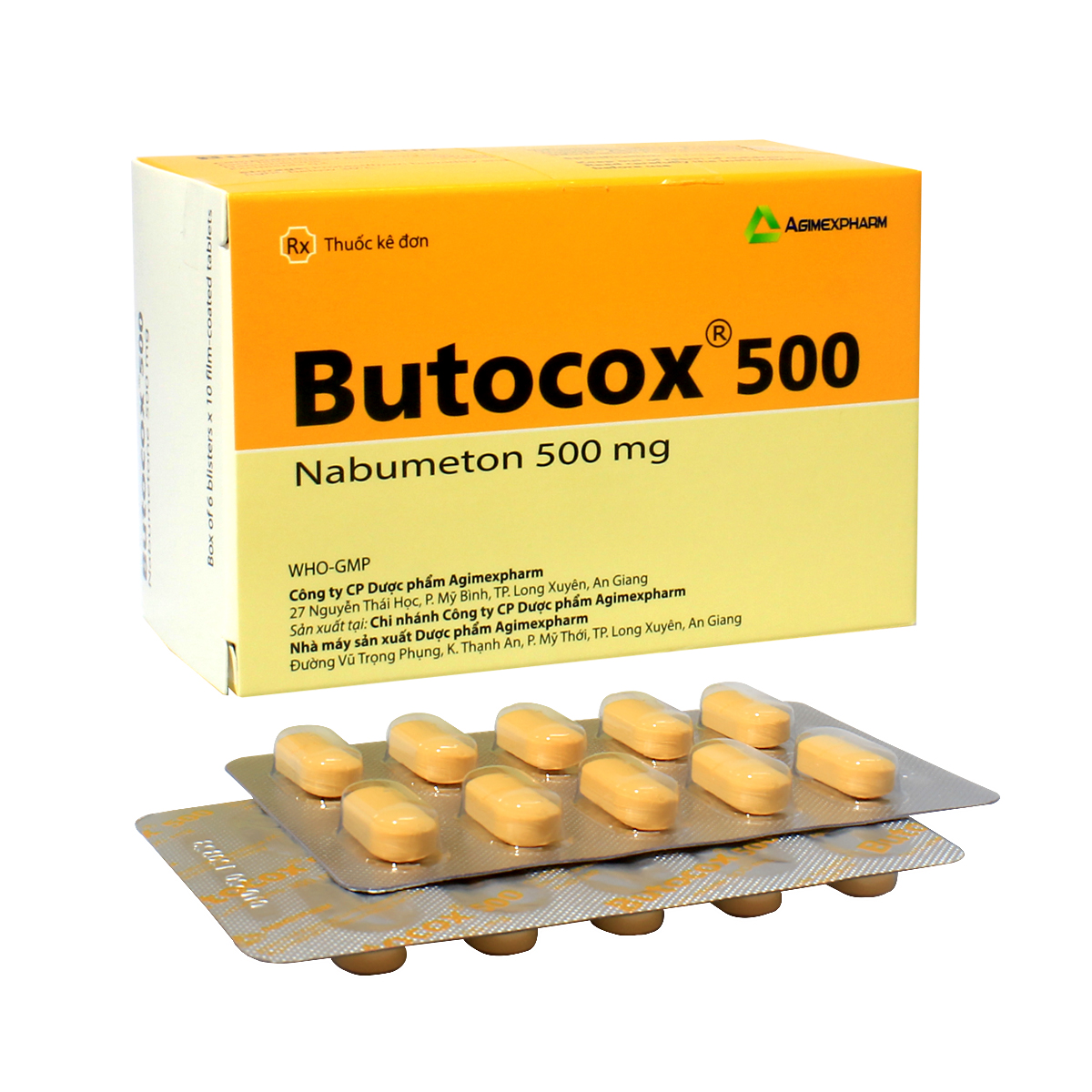
Indications:
Treatment of osteoarthritis and rheumatoid arthritis requiring anti-inflammatory and analgesic treatment.
Dosage and administration:
Administration: BUTOCOX 500 film-coated tablets should be taken with or after food, with a lot of water.
Dosage:
Adults:
The recommended daily dose is two tablets (1 g) taken as a single dose at bedtime.
For severe or persistent symptoms, an additional one or two tablets (500 mg – 1 g) may be given as a morning dose.
Elderly:
Blood levels may be higher in elderly patients. Therefore, the recommended daily dose of 1 g should not be exceeded in this age group.
Undesirable effects may be avoided by using the lowest effective dose and for the shortest possible duration. The patients should be monitored for gastrointestinal bleeding during therapy.
Children:
There are no clinical data to recommend use of nabumetone in children.
Some special attention on the handling of the medicine before and after use:
There are no special requirements for handling this medicine after use.
Contraindications:
Patients hypersensitive to nabumetone or any of the excipients in this medicine.
Patients hypersensitive to aspirin or other NSAID’s: Signs of asthma, nasal polyps, angioedema or urticaria occur after taking aspirin or other NSAID’s.
Patients with active peptic ulcers.
Patients with severe heart failure, hepatic failure.
Do not use nabumetone just before or after coronary artery bypass graft (CABG) surgery.
Patients with severe renal failure (creatinine clearance < 30 ml/min).
Children under 15 years of age due to the fact that there are no adequate data on nabumetone use for children.
Pregnancy and lactation.
Warnings and precautions for use:
Undesirable effects may be minimised by using the minimum effective dose for the shortest duration necessary to control symptoms.
The use of nabumetone with concomitant NSAIDs including cyclooxygenase-2 selective inhibitors should be avoided.
Risk of cardiovascular thrombotic events:
Non-steroidal anti-inflammatory drugs (NSAIDs), different from aspirin, with systemic effects may cause an increased risk of cardiovascular thrombotic events, including heart attack and stroke which can be fatal. This risk may occur early in the first few weeks of treatment and increase with time. The risk of cardiovascular thrombotic events has been mainly observed at high doses.
Doctors should periodically evaluate the occurrence of cardiovascular events, even in the absence of previous cardiovascular symptoms. Patients should be warned about the symptoms of serious cardiac events and should meet the doctor as soon as these symptoms occur.
To minimize the potential risk for adverse events, the lowest effective dose of nabumetone should be used for the shortest possible length of time.
Patients with uncontrolled hypertension, congestive heart failure, ischaemic heart disease, peripheral arterial disease, and/or cerebrovascular disease should only be treated with nabumetone after careful consideration. Similar consideration should be made before initiating longer-term treatment of patients with risk factors for cardiovascular disease (e.g. hypertension, hyperlipidaemia, diabetes mellitus, smoking).
Elderly:
The elderly have an increased frequency of adverse reactions to NSAIDs, especially gastrointestinal bleeding and perforation which may be fatal.
Respiratory disorders:
Caution is required if administered to patients suffering from, or with a previous history of, bronchial asthma since NSAIDs have been reported to precipitate bronchospasm in such patients.
Hepatic, renal and cardiovascular failure:
The administration of an NSAID may cause a dose dependent reduction in prostaglandin formation and precipitate renal failure. Patients at greatest risk of this reaction are those with impaired renal function, cardiac impairment, liver dysfunction, those taking diuretics and older people. Severe renal impairment (creatinine clearance less than 30ml/min), laboratory tests should be performed at baseline and within some weeks of starting therapy. Further tests should be carried out as necessary; if the impairment worsens, discontinuation of therapy may be warranted. In moderate renal impairment (creatinine clearance 30 to 49 ml/min) there is a 50% increase in unbound plasma 6 MNA and dose reduction may be warranted.
As with other NSAIDs, abnormalities of liver function tests, rare cases of jaundice and hepatic failure (some of them with fatal outcomes), have been reported. A patient with signs/symptoms suggesting liver dysfunction or who has experienced an abnormal liver function test while on nabumetone therapy should be evaluated for evidence of development of a more serious hepatic reaction. Nabumetone should be discontinued if such a reaction occurs.
Gastrointestinal bleeding, ulceration and perforation:
Gastrointestinal (GI) bleeding, ulceration or perforation, which can be fatal, has been reported with all NSAIDs at any time during treatment, with or without warning symptoms or a previous history of serious GI events.
Patients with a history of GI peptic disease, particularly when older, should report any unusual abdominal symptoms (especially GI bleeding) particularly in the initial stages of treatment.
The risk of GI bleeding, ulceration or perforation is higher with increasing NSAID doses, in patients with a history of ulcer, particularly if complicated with haemorrhage or perforation, and in older people. These patients should commence treatment on the lowest dose available.
Combination therapy with protective agents (e.g. misoprostol or proton pump inhibitors) should be considered for these patients, and also for patients requiring concomitant low dose aspirin, or other drugs likely to increase gastrointestinal risk.
Caution should be advised in patients receiving concomitant medications which could increase the risk of ulceration or bleeding, such as oral corticosteroids, anticoagulants such as warfarin, NSAIDs, SSRIs or anti-platelet agents such as aspirin and clopidogrel. When GI bleeding or ulceration occurs in patients receiving nabumetone, the treatment should be withdrawn.
NSAIDs should be given with care to patients with a history of gastrointestinal disease (ulcerative colitis, Crohn’s disease) as these conditions may be exacerbated.
In patients with active peptic ulcer, doctor must weigh the benefits of therapy with nabumetone against possible hazards, institute an appropriate ulcer treatment regimen and monitor the patients’ progress carefully.
Nabumetone is better tolerated than most other NSAIDs, primarily because it results in fewer effects on the gastrointestinal (GI) system. In a review of both pre- and post-registration data from clinical trials with nabumetone, the mean cumulative frequencies of GI perforations, ulcers or bleeds (PUBs) in patients treated from 3 to 6 months, 1 year and 2 years were respectively 0.3%, 0.5% and 0.8%; although these figures are lower than those ascribed to other NSAIDs, the prescribing doctor should be aware that these ADRs can occur even in the absence of previous peptic disease.
Despite the relative gastrointestinal and renal safety of nabumetone, caution should be used when administering to patients with:
Active upper GI ulceration. Appropriate treatment should be instigated prior to initiating nabumetone therapy.
Previous aspirin- or other NSAID-induced asthma, urticaria or other allergic type reactions. Since fatal asthma attacks have been reported in such patients receiving other NSAIDs, the first administration of nabumetone should be medically supervised.
SLE and mixed connective tissue disease:
In patients with systemic lupus erythematosus (SLE) and mixed connective tissue disorders, there may be an increased risk of aseptic meningitis.
Dermatological:
Serious skin reactions, some of them fatal, including exfoliative dermatitis, Stevens-Johnson syndrome and toxic epidermal necrolysis, have been reported very rarely in association with the use of NSAIDs. Patients appear to be at highest risk for these reactions early in the course of therapy; the onset of the reaction occurring in the majority of cases within the first month of treatment. Nabumetone should be discontinued at the first appearance of skin rash, mucosal lesions or any other sign of hypersensitivity.
Impaired female fertility:
The use of nabumetone or other non-steroidal anti-inflammatory drugs may impair female fertility, and is not recommended in women attempting to conceive. In women who have difficulties conceiving or who are undergoing investigation of infertility, withdrawal of nabumetone should be considered.
NSAIDs could hide signs of infectious disease.
Cases of blurred vision or reduced visual acuity have been reported with NSAID use, including nabumetone. Patients presenting with these events must be submitted to ophthalmological examination.
This medicine contains sunset yellow lake which can cause allergic reactions. Caution should be exercised when use BUTOCOX 500 tablet in patients allergic to colorants.
Pregnancy and lactation:
Pregnancy:
There is no clinical trial experience with the use of nabumetone during human pregnancy.
Congenital abnormalities have been reported in association with NSAID administration in human; however, these are low in frequency and do not appear to follow any discernible pattern. Risk of closure of the ductus ateriosus, pulmonary and cardiac changes, NSAID use in the last trimester of pregnancy is contraindicated. Labor can be delayed and prolonged with the possibility of increased bleeding. NSAID should not be given during the first and second trimesters of pregnancy unless the potential benefit to the patient outweighs the potential risk to the foetus, the dose should be kept as low and duration of treatment as short as possible.
Women who are likely to become pregnant or are taking contraceptives should consult their doctor carefully before starting treatment with this medication.
Lactation:
There is no clinical trial experience with the use of nabumetone during lactation.
It is not known whether nabumetone is excreted in human milk; however, 6MNA is excreted in the milk of lactating rats. With the potential for serious adverse reactions in breastfed infants from nabumetone, a decision should be made whether to discontinue breast feeding or to discontinue the drug, taking into account the importance of the drug to the mother.
Effects on ability to drive and use machines:
Nabumetone can cause dizziness, headache, hallucinations, which affect the ability to drive and operate machinery.
Interactions, incompatibilities of medicine:
Interaction with other medicinal products and other forms of interaction:
Other analgesics including cyclooxygenase-2 selective inhibitors: Avoid the concomitant use of two or more NSAIDs (including aspirin) as these may increase the risk of adverse effects.
Diuretics and other antihypertensives drugs such as angiotensin-converting enzyme inhibitors (ACEI) and angiotensin receptor antagonists (ARA) may present with decreased effect when concomitantly administered with NSAID; in some persons (such as elderly or dehydrated patients) this could lead to a further decrease in renal function and eventually to acute renal failure. Consequently, hydration and frequent monitoring of these patients is warranted. Hyperkalaemia might develop, particularly with concomitant potassium sparing diuretics administration.
The following commonly available drugs do not affect nabumetone metabolism and bioavailability: Paracetamol, ASA, cimetidine, aluminium hydroxide antacids.
Cardiac glycosides: NSAIDs may exacerbate cardiac failure, reduce GFR and increase plasma glycoside levels.
Lithium: Decreased elimination of lithium.
Methotrexate: Decreased elimination of methotrexate.
Ciclosporin: Increased risk of nephrotoxicity.
Mifepristone: NSAIDs should not be used for 8-12 days after mifepristone administration as NSAIDs can reduce the effect of mifepristone.
Corticosteroids: Increased risk of gastrointestinal ulceration and bleeding.
Anticoagulants: NSAIDs may enhance the effects of anticoagulants, such as warfarin; concomitant administration of anticoagulants with nabumetone should be undertaken with caution and overdose signals carefully monitored.
Quinolone antibiotics: Animal data indicate that some NSAIDs can increase the risk of convulsions associated with quinoline antibiotics. Patients taking NSAIDs and quinolines may have an increased risk of developing convulsions.
Anti-platelet agents and selective serotonin reuptake inhibitors (SSRIs): Increased risk of gastrointestinal bleeding.
Tacrolimus: Possible increased risk of nephrotoxicity when NSAIDs are given with tacrolimus.
Zidovudine: Increased risk of haematological toxicity when NSAIDs are given with zidovudine. There is evidence of an increased risk of haemarthroses and haematoma in HIV(+) haemophiliacs receiving concurrent treatment with NSAIDs, such as zidovudine and ibuprofen.
Concomitant use of nabumetone with other protein-binding agents, eg., sulphonamides, sulphonylurea or hydantoin, should be taken with caution and monitored for signs of overdosage.
No specific interaction studies with nambutone and the above have been performed. Caution is therefore recommended for concomitant therapy with the drugs listed above.
Incompatibilities:
Because there are no studies about the incompatibility of the medicine, it should not be mixed with other medicines.
Undesirable effects:
Side effects are dose related, requiring use of the lowest effective dose in the shortest time possible.
Risk of cardiovascular thrombotic events (see Warnings and precautions for use).
Side effects are classified according to frequency: Very common (ADR ≥ 1/10), common (1/100 ≤ ADR < 1/10), uncommon (1/1,000 ≤ ADR < 1/100), rare (1/10,000 ≤ ADR < 1/1,000), very rare (ADR < 1/10,000); can not be estimated from the available data “Not known”.
Blood and lymphatic system disorders:
| Very rare | Thrombocytopenia |
| Not known | Neutropenia, agranulocytosis, aplastic anaemia, leucopenia and haemolytic anaemia |
Immune system disorders:
| Very rare | Anaphylaxis, anaphylactoid reaction |
Psychiatric disorders:
| Uncommon | Confusion, nervousness, insomnia |
| Not known | Depression, hallucinations |
Nervous system disorders:
| Uncommon | Somnolence, dizziness, headache, paresthesia |
| Not known | Aseptic meningitis (especially in patients with existing autoimmune disorders such as systemic lupus erythematosus, mixed connective tissue disease, with symptoms such as stiff neck, headache, nausea, vomiting, fever or disorientation), vertigo, drowsiness |
Eye disorders:
| Uncommon | Abnormal vision, eye disorders |
| Not known | Optic neuritis |
Ear and labyrinth disorders:
| Common | Tinnitus, ear disorders |
Vascular disorders:
| Common | Increases in blood pressure |
Respiratory, thoracic and mediastinal disorders:
| Uncommon | Dyspnoea, respiratory disorder, epistaxis |
| Very rare | Interstitial pneumonitis |
| Not known | Asthma, aggravated asthma, bronchospasm |
Gastrointestinal disorders:
| Common | Diarrhoea, constipation, dyspepsia, gastritis, nausea, abdominal pain, flatulence |
| Uncommon | Duodenal ulcer, GI bleeding, gastric ulcer, GI disorder, melaena, vomiting, stomatitis, dry mouth |
| Very rare | Pancreatitis |
Gastrointestinal: The most commonly observed adverse events are gastrointestinal in nature.
Peptic ulcers, perforation or GI bleeding, sometimes fatal, particularly in the elderly, may occur. Nausea, vomiting, diarrhoea, flatulence, constipation, dyspepsia, abdominal pain, melaena, haematemesis, ulcerative stomatitis, exacerbation of colitis and Crohn’s disease have been reported following administration. Less frequently, gastritis has been reported.
Hepatobiliary disorders:
| Very rare | Hepatic failure, jaundice |
Skin and subcutaneous tissue disorders:
| Common | Rash, pruritus |
| Uncommon | Photosensitivity, urticaria, sweating |
| Very rare | Bullous reactions including toxic epidermal necrolysis, Stevens Johnson syndrome, erythema multiforme, angioedema, pseudoporphyria, alopecia |
| Not known | Purpura |
Musculoskeletal and connective tissue disorders:
| Uncommon | Myopathy |
Renal and urinary disorders:
| Uncommon | Urinary tract disorder |
| Very rare | Renal failure, nephrotic syndrome |
| Not known | Interstitial nephritis |
Reproductive system and breast disorders:
| Very rare | Menorrhagia |
General disorders and administration site conditions:
| Common | Oedema |
| Uncommon | Asthenia, fatigue |
| Not known | Malaise |
Investigations:
| Uncommon | Elevated liver function tests |
Oedema, hypertension and cardiac failure have been reported in association with NSAID treatment.
Clinical trial and epidemiological data suggest that use of some NSAIDs (particularly at high doses and in long term treatment) may be associated with an increased risk of arterial thrombotic events (e.g., myocardial infarction or stroke).
Overdosage and management:
Overdose:
Symptoms of acute overdoses after taking nabumetone as well as NSAIDs are usually limited to lethargy, drowsiness, nausea, vomiting, and epigastric pain, which are generally reversible with supportive care. Gastrointestinal bleeding can occur. Hypertension, acute renal failure, respiratory depression, and coma may occur, but are rare. Anaphylactoid reactions have been reported with therapeutic ingestion, and may occur following an overdose.
Management:
Like other NSAIDs, patients should be managed by symptomatic and supportive care following NSAIDs overdose. There are no specific antidotes. Emesis and/or activated charcoal (60 to 100 grams in adults, 1 to 2 g/kg in children), and/or osmotic cathartic may be indicated in patients seen within 4 hours of ingestion with symptoms or following a large overdose (5 to 10 times the usual dose).
Forced diuresis, alkalinization of urine, hemodialysis, or hemoperfusion may not be useful due to high protein binding.
Pharmacodynamics:
Pharmacotherapeutic group: Other anti-inflammatory and antirheumatic agents, non-steroids.
ATC code: M01AX01
Nabumetone is a non-steroidal anti-inflammatory drug (NSAID) which has antipyretic, analgesic and anti-inflammatory activities. It belongs to non-narcotic analgesics effective for mild to moderate pain relief such as traumatic pain, arthritis, and other musculoskeletal conditions. Its mode of action is not known, however, the ability to inhibit prostaglandin synthesis may be involved in the anti-inflammatory effect.
Nabumetone is an inhibitor of prostaglandin synthesis. Following absorption from the gastrointestinal tract nabumetone is rapidly metabolised in the liver to the principal active metabolite, 6-methoxy-2-naphthylacetic acid (6 MNA) a potent inhibitor of prostaglandin synthesis.
Pharmacokinetics:
Absorption:
Nabumetone is well absorbed from the gastrointestinal tract. Nabumetone is not detected in the plasma because, after absorption, it undergoes rapid biotransformation to the principal active metabolite, 6-methoxy-2-naphthylacetic acid (6 MNA) and it is strongly bound to plasma proteins.
Distribution:
6 MNA is more than 99% bound to plasma proteins, it is distributed into synovial fluid and crosses the placenta and found in human breast milk.
Metabolism:
Approximately 35% of oral dose of nabumetone is converted to 6 MNA and 50% is converted into unidentified metabolites which are subsequently excreted in the urine.
Elimination:
6 MNA is eliminated principally in conjugation with glucuronic acid, and o-demethylation followed by conjugation, the main route of excretion being the urine.
The elimination half-life in plasma is about 24 hours.
Storage conditions, shelf-life, quality specification of the medicine:
Storage conditions: Protect from humidity and light, below 300C.
Shelf-life: 36 months from the manufacture date.
Quality specification: In house.
A1202004101