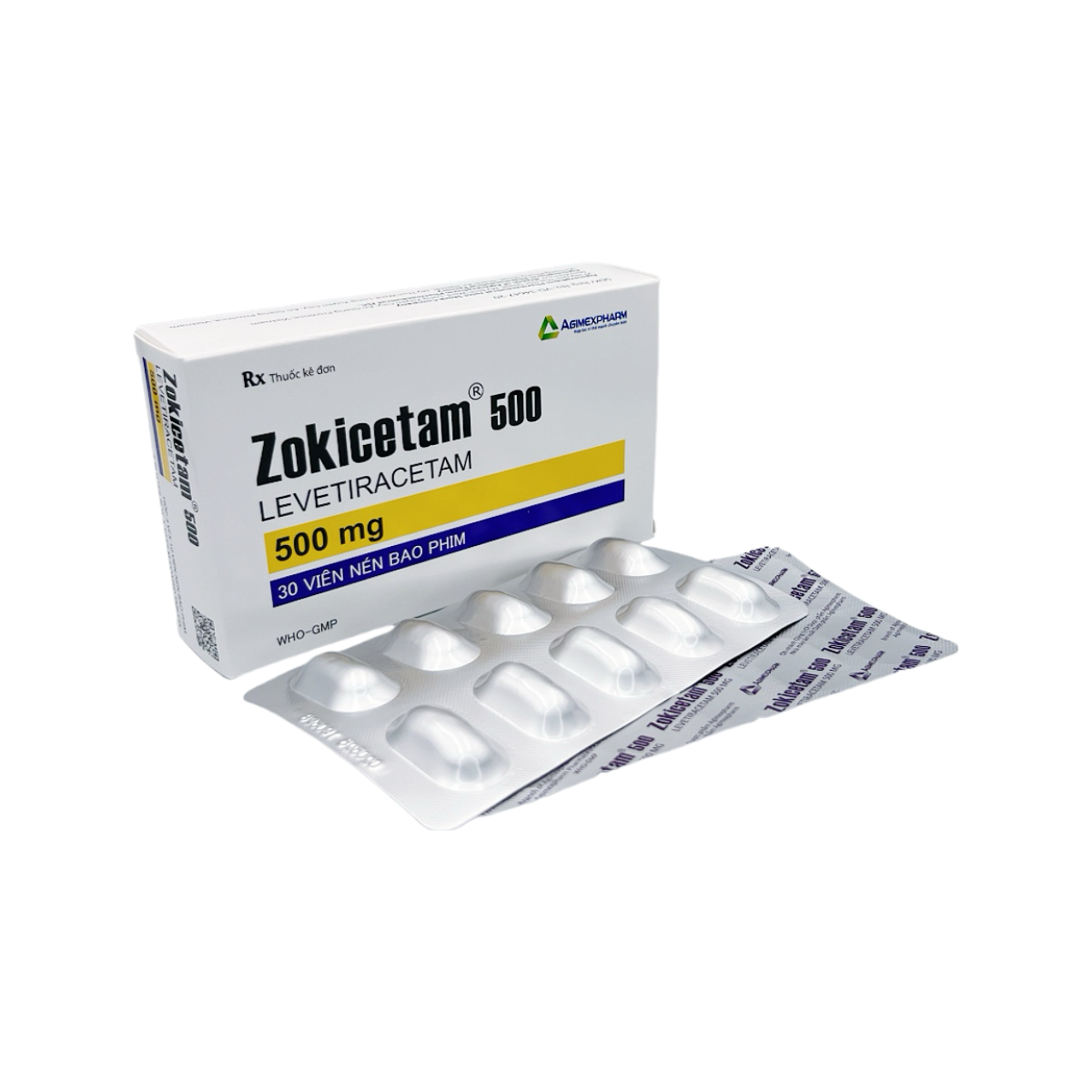
Indications:
ZOKICETAM tablets containing levetiracetam are indicated as:
Monotherapy in the treatment of partial onset seizures with or without secondary generalisation in adults and adolescents from 16 years of age with newly diagnosed epilepsy.
Levetiracetam is indicated as adjunctive therapy in:
- The treatment of partial onset seizures with or without secondary generalisation in adults, adolescents, and children 12 years of age with epilepsy.
- The treatment of myoclonic seizures in adults and adolescents 12 years of age and older with juvenile myoclonic epilepsy.
- The treatment of primary generalised tonic-clonic seizures in adults and adolescents 12 years of age and older with idiopathic generalised epilepsy.
Administration, dosage:
Administration: Levetiracetam tablets are taken orally with a sufficient quantity of liquid and may be taken with or without food. The daily dose is administered in two equally divided doses.
Dosage:
Monotherapy:
Adults and adolescents 16 years of age and older:
The recommended starting dose is 250 mg twice daily which should be increased to a dose of 500 mg twice daily after two weeks. The dose can be further increased by 250 mg twice daily every two weeks depending upon the clinical response. The maximum dose is 1500 mg twice daily.
Children and adolescents under 16 years of age:
The safety and efficacy of levetiracetam in children and adolescents below 16 years as monotherapy treatment have not been established.
Add-on therapy:
Adults (≥ 18 years) and adolescents (12 to 17 years) weighing 50 kg or more:
The initial therapeutic dose is 500 mg twice daily. This dose can be started on the first day of treatment.
Depending upon the clinical response and tolerability, the daily dose can be increased up to 1500 mg twice daily. Dose changes can be made in 500 mg twice daily increases or decreases every two to four weeks.
Children and adolescents (12 to 17 years) weighing less than 50 kg:
The tablet formulation is not adapted for use in children weighing less than 25 kg. Oral solution is the preferred formulation for use in this population.
The lowest effective dose should be used.
The starting dose for a child or adolescent of 25 kg should be 250 mg twice daily with a maximum dose of 750 mg twice daily.
Dosing for children 50 kg or greater is the same as in adults.
Elderly (65 years and older):
Adjustment of the dose is recommended in elderly patients with compromised renal function (see “Renal impairment” below).
Renal impairment:
The daily dose must be individualised according to renal function.
Dosing adjustment for adult and adolescent patients weighing more than 50 kg with impaired renal function:
Clcr 50 – 79 ml/min/l.73m2: 500 – 1000 mg every 12 hours.
Clcr 30 – 49 ml/min/l.73m2: 250 – 750 mg every 12 hours.
Clcr < 30 ml/min/l.73m2: 250 – 500 mg every 12 hours.
Patients undergoing dialysis: A 750 mg loading dose is recommended on the first day of treatment with levetiracetam, then 500 to 1000 mg once daily. Following dialysis, a 250 to 500 mg supplemental dose is recommended.
Dosing adjustment for children and adolescent patients weighing less than 50 kg with impaired renal function:
Clcr 50 – 79 ml/min: 10 to 20 mg/kg x twice daily.
Clcr 30 – 49 ml/min: 5 to 15 mg/kg x twice daily.
Clcr < 30 ml/min: 5 to 10 mg/kg x twice daily.
Patients undergoing dialysis: A 15 mg/kg loading dose is recommended on the first day of treatment with levetiracetam, then 10 to 20 mg/kg once daily. Following dialysis, a 5 to 10 mg/kg supplemental dose is recommended.
Hepatic impairment:
No dose adjustment is needed in patients with mild to moderate hepatic impairment. In patients with severe hepatic impairment, the creatinine clearance may underestimate the renal insufficiency. Therefore a 50 % reduction of the daily maintenance dose is recommended when the creatinine clearance is < 60 ml/min/1.73m2.
Some special attention on the handling of the medicine before and after use:
There are no special requirements for handling this medicine after use.
Contraindications:
Hypersensitivity to levetiracetam or pyrrolidone derivatives or to any of the excipients of the drug.
Warnings and precautions for use:
Conditions where caution should be taken:
Discontinuation: Levetiracetam should not be discontinued abruptly because of the possibility of increasing seizure frequency. Levetiracetam should be withdrawn gradually by reducing the dose by 1 g every 2 weeks (e.g. in adults and adolescents weighing more than 50 kg: 500 mg decreases twice daily every two to four weeks; in children and adolescents weighing less than 50 kg: Dose decrease should not exceed 10 mg/kg twice daily every two weeks).
Allergic reactions: Serious skin reactions may occur in patients taking levetiracetam (Stevens-Johnson syndrome, toxic epidermal necrolysis). It is necessary to stop the drug immediately and apply alternative treatments.
Renal or hepatic impairment: Dose adjustment is needed in renal impairment because of the increased risk of drug poisoning. In patients with severe hepatic impairment, renal function should be evaluated prior to initiation of drug use.
Depression and/or suicidal ideation: Levetiracetam may initiate or worsen existing mental disorders in the patient. In such cases, it is necessary to reduce the dose or discontinue the drug and monitor the patient closely.
Suicide and suicide attempt have been reported in patients treated with levetiracetam. The drug has shown a increased risk of suicidal thoughts and behaviour. Therefore, patients should be monitored closely. The prescribing physician should weigh the patient’s risk of suicide and the benefit of treatment with levetiracetam.
Children: The tablet formulation is not adapted for use in infants and children under the age of 6 years.
The safety and efficacy of the drug (solution and oral tablet forms) have not been established in children less than 1 month with partial onset seizures, in children under 12 years of age with juvenile myoclonic epilepsy or idiopathic generalised epilepsy.
Elderly: No overall differences in safety were observed between geriatric subjects and younger subjects. However, there were insufficient numbers of elderly subjects to adequately assess the effectiveness of the drug in these patients.
Lactose: This medicine contains lactose. Patients with rare hereditary problems of galactose intolerance, the Lapp lactase deficiency or glucose-galactose malabsorption should not take this medicine.
Pregnancy and lactation:
Pregnancy:
There is insufficient information available on the use of levetiracetam in pregnant women. Levetiracetam is not recommended during pregnancy and in women of childbearing potential not using contraception unless clearly necessary.
Lactation:
Levetiracetam is excreted in human breast milk. Therefore, breast-feeding is not recommended. Due to the risk of serious adverse events to the breastfed infants, stopping breastfeeding or discontinuation of the drug should be weighed considering necessary level for maternal drug use.
Effects on ability to drive and use machines:
Levetiracetam has minor or moderate influence on the ability to drive and use machines have been performed.
Due to possible different individual sensitivity, some patients might experience somnolence or other central nervous system related symptoms, especially at the beginning of treatment or following a dose increase. Therefore, caution is recommended in those patients when driving vehicles or operating machinery. Patients are advised not to drive or use machines until it is established that their ability to perform such activities is not affected.
Interactions, incompatibilities of medicine:
Interaction with other medicinal products and other forms of interaction:
Antiepileptic medicinal products: There is no clinical evidence of a drug interaction between levetiracetam and other antiepileptic drugs.
Pre-marketing data from clinical studies conducted in adults indicate that levetiracetam did not influence the serum concentrations of existing antiepileptic medicinal products (phenytoin, carbamazepine, valproic acid, phenobarbital, lamotrigine, gabapentin and primidone) and that these antiepileptic medicinal products did not influence the pharmacokinetics of levetiracetam.
As in adults, there is no evidence of clinically significant medicinal product interactions in paediatric patients receiving up to 60 mg/kg/day levetiracetam.
A retrospective assessment of pharmacokinetic interactions in children and adolescents with epilepsy (4 to 17 years) confirmed that adjunctive therapy with orally administered levetiracetam did not influence the steady-state serum concentrations of concomitantly administered carbamazepine and valproate. However, data suggested a 20% higher levetiracetam clearance in children taking enzyme-inducing antiepileptic medicinal products. Dose adjustment is not required.
Probenecid: Probenecid (500 mg four times daily), a renal tubular secretion blocking agent, has been shown to inhibit the renal clearance of the primary metabolite but not of levetiracetam. Nevertheless, the concentration of this metabolite remains low.
Methotrexate: Concomitant administration of levetiracetam and methotrexate has been reported to decrease methotrexate clearance, resulting in increased/prolonged blood methotrexate concentration to potentially toxic levels. Blood methotrexate and levetiracetam levels should be carefully monitored in patients treated concomitantly with the two drugs.
Oral contraceptives, digoxin and warfarin: Levetiracetam 1000 mg daily did not influence the pharmacokinetics of oral contraceptives (ethinylestradiol and levonorgestrel) and endocrine parameters (luteinizing hormone and progesterone) were not modified. Levetiracetam 2000 mg daily did not influence the pharmacokinetics of digoxin and warfarin; prothrombin times were not modified. Co-administration with digoxin, oral contraceptives and warfarin did not influence the pharmacokinetics of levetiracetam.
Laxatives: There have been isolated reports of decreased levetiracetam efficacy when the osmotic laxative macrogol has been concomitantly administered with oral levetiracetam. Therefore, macrogol should not be taken orally for one hour before and for one hour after taking levetiracetam.
Food and alcohol: The extent of absorption of levetiracetam was not altered by food, but the rate of absorption was slightly reduced.
No data on the interaction of levetiracetam with alcohol are available.
Incompatibilities:
Because there are no studies of drug incompatibility, do not mix this drug with other drugs.
Undesirable effects:
Side effects are classified according to frequency: Very common (ADR ≥ 1/10), common (1/100 ≤ ADR < 1/10), uncommon (1/1,000 ≤ ADR < 1/100), rare (1/10,000 ≤ ADR < 1/1,000), very rare (ADR < 1/10,000); can not be estimated from the available data “Not known”.
Common:
Gastrointestinal: Anorexia, vomiting.
Immune system: Infectious diseases.
Musculoskeletal: Pain in the neck.
Neurological: Asthenia, dizziness, headache, insomnia.
Psychiatric: Abnormal behavior, depression, stress feeling, hostility/aggression, personality disorder, mood swings.
Respiratory: Cough, pharyngitis, rhinitis.
Other: Fatigue, pain.
Serious ADRs:
Skin: Stevens-Johnson syndrome, toxic epidermal necrolysis.
Blood: Decreased cell lines, thrombocytopenia.
Liver: Liver failure.
Psychiatric: Suicide attempt, suicidal ideation.
Guidelines for ADR management:
In the event of serious skin reactions (Stevens¬-Johnson syndrome, toxic epidermal necrolysis), the drug should be stopped immediately and alternative therapies should be applied.
In the event that the drug initiates or worsens existing mental disorders in the patient, the dose should be reduced or discontinued and the patient should be monitored closely.
Notify your doctor undesirable effects encountered when using the drug.
Overdose and management:
Overdose:
Symptoms: Somnolence, agitation, aggression, depressed level of consciousness, respiratory depression and coma were observed with levetiracetam overdoses.
Management: After an acute overdose, the stomach may be emptied by gastric lavage or by induction of emesis. There is no specific antidote for levetiracetam; therefore, treatment of an overdose will be symptomatic and may include haemodialysis if necessary. The dialyser extraction efficiency is 60 % for levetiracetam and 74 % for the primary metabolite.
Pharmacodynamics:
Pharmacotherapeutic group: Antiepileptics.
ATC code: N03AX14.
Levetiracetam, a pyrrolidone derivative, is chemically unrelated to existing antiepileptic agents. The mechanism of action of levetiracetam still remains to be fully elucidated. In animals, levetiracetam did not inhibit single seizures induced by maximal stimulation with electrical current or different chemoconvulsants and showed only minimal activity in submaximal stimulation and in threshold tests. Protection was observed, however, against secondarily generalized activity from focal seizures induced by two chemoconvulsants that induce seizures that mimic some features of human complex partial seizures with secondary generalization. Levetiracetam also displayed inhibitory properties in the kindling model in rats with reduced threshold of stimulation, similar to those with human complex partial seizures.
Levetiracetam did not demonstrate binding affinity for receptors of benzodiazepin, GABA (gammaaminobutyric acid), glycine or NMDA (N-methyl-D-aspartate). The drug acts through a specific binding site of brain tissue, the synaptic vesicle protein SV2A (protein SV2A). This binding is reversible, saturated and stereoselective. Levetiracetam only attaches locally to synaptic membranes in the central nervous system with no binding occurring in peripheral tissues. Levetiracetam inhibits burst firing without affecting normal neuronal excitability, which suggests that it may selectively prevent hyper-synchronization of epileptiform burst firing and propagation of seizure activity.
Pharmacokinetics:
Absorption: Levetiracetam is rapidly absorbed following oral administration from the gastrointestinal tract with approximately 100% bioavailability.
Distribution: Peak plasma concentrations are achieved at 1.3 hours after dosing. Steady-state is achieved after two days. Plasma protein binding rate is low, less than 10%. The volume of distribution of levetiracetam is approximately 0.7 liter/kg.
Metabolism: Approximately 25% of the dose is hydrogenated to inactive metabolites. Levetiracetam does not have a high affinity for CYP isoenzymes and does not inhibit these isoenzymes.
Elimination: 95% of the dose is excreted in the urine as the original intact form and metabolite. The plasma elimination half-life of levetiracetam is about 6-8 hours in adults and children over 12 years old, which is possibly shorter than in young children. Levetiracetam is excreted in human milk, the drug can be eliminated from the body by hemodialysis.
Storage conditions, shelf – life, quality specification of the medicine:
Storage conditions: Protect from humidity and light, below 300C.
Shelf – life: 36 months from the manufacture date.
Specification: In house.