Indications:
Symptomatic treatment of painful muscle tension, in particular low back pain (lumbago).
Methocarbamol is indicated in adults.
Administration, dosage:
Administration: Oral administration.
Dosage:
Adults:
The recommended dose: 2 tablets x 3 times/day.
At the beginning of treatment, a dose of 2 tablets x 4 times/day is recommended.
In severe cases, up to 10 tablets/day can be taken.
The duration of treatment depends on the symptoms induced by muscle tension, but should not exceed 30 days.
Children and adolescents:
The safety and efficacy of methocarbamol in children and adolescents have not been established.
Elderly:
Half the maximum dose or less may be sufficient to produce a therapeutic response.
Patients with hepatic impairment:
In patients with chronic hepatic disease the elimination half-life may be prolonged. Therefore, consideration should be given to increasing the dose interval.
Some special attention on the handling of the medicine before and after use:
There are no special requirements for handling this medicine after use.
Contraindications:
Hypersensitivity to methocarbamol or to any of the excipients of the medicine.
Comatose or pre-comatose states.
Disorders of the central nervous system (CNS).
Myasthenia gravis.
Epilepsy.
Warnings and precautions for use:
Methocarbamol should be used with caution in patients with impaired renal and/or hepatic function.
Patients should be advised that the intake of alcohol during the treatment with methocarbamol or a combination with other centrally acting agents can lead to an increase in effects.
Interference with laboratory tests:
Methocarbamol may cause colour interference in screening tests for hydroxyindoleacetic acid (5-HIAA) and
vanillylmandelic acid (VMA).
This medicine contains sunset yellow, tartrazine and ponceau which may cause allergic reactions. Caution should be exercised when using this medicine to patients allergic to dyes.
Pregnancy, lactation and fertility:
Pregnancy:
There is no experience in the use of methocarbamol during pregnancy. Animal studies have not established safe use of methocarbamol with regard to effects upon pregnancy, embryonic/foetal development, parturition and postnatal development. The potential risk for humans is not known. Therefore, methocarbamol should not be used during pregnancy.
Lactation:
It is not known whether methocarbamol and/or its metabolites pass into human milk. Methocarbamol and/or its metabolites are excreted into the milk of lactating dogs. Therefore, methocarbamol should not be used by breast-feeding women.
Fertility:
No data are available on the influence of methocarbamol on human fertility.
Effects on ability to drive, use machines:
Methocarbamol has moderate influence on the ability to drive and use machines as methocarbamol may cause dizziness or drowsiness, especially if other medications capable of causing drowsiness are also being taken.
Patients should be advised that if dizziness or drowsiness occurs, these activities should be avoided.
Interactions, incompatibilities of medicine:
Interaction of the drug with other drugs and other types of interactions:
The concomitant administration of methocarbamol and centrally acting medicinal products such as barbiturates, opioids and appetite suppressants may mutually potentiate the effects of the medicinal products.
Using methocarbamol together with alcohol may potentiate the effect of the medicinal product.
Methocarbamol can potentiate the effect of anticholinergic medicinal products such as atropine and some psychotropic medicinal products.
Methocarbamol may inhibit the effect of pyridostigmine bromide. Therefore, methocarbamol must not be administered to patients with myasthenia gravis receiving pyridostigmine.
Incompatibilities:
Because there are no studies of drug incompatibility, do not mix this drug with other drugs.
Undesirable effects:
Side effects are classified according to frequency: Very common (ADR ≥ 1/10), common (1/100 ≤ ADR < 1/10), uncommon (1/1,000 ≤ ADR < 1/100), rare (1/10,000 ≤ ADR < 1/1,000), very rare (ADR < 1/10,000); cannot be estimated from the available data “Not known”.
| Classification of organ systems | Frequency according to MedDRA convention | ||
| Rare | Very rare | Not known | |
| Infections and infestations | Conjunctivitis | ||
| Immune system disorders | Anaphylactic reaction | ||
| Metabolic and nutrition disorders | Anorexia | ||
| Psychiatric disorders | Unrest, anxiety, confusion | ||
| Nervous system disorders | Headache, vertigo, metallic taste | Syncope, nystagmus, dizziness, tremor, convulsion | Drowsiness |
| Eye disorders | Impaired vision | ||
| Cardiac disorders | Bradycardia | ||
| Vascular disorders | Hypotension | Hot flushes | |
| Respiratory, thoracic and mediastinal disorders | Nasal congestion | ||
| Gastrointestinal disorders | Nausea, vomiting | ||
| Skin and subcutaneous tissue disorders | Angioedema, rash, itching, urticaria | ||
| General disorders and administration site conditions | Fever | ||
Overdose and management:
Overdose:
Limited information is available on the acute toxicity of methocarbamol. Overdose of methocarbamol is frequently in conjunction with alcohol or other CNS depressants and includes the following symptoms: Nausea, drowsiness, blurred vision, hypotension, seizures and coma.
After oral intake of 22.5 g to 50 g methocarbamol with suicidal intent two patients showed drowsiness, but recovered completely within 24 hours.
In literature 3 fatal cases are mentioned when patients in addition to methocarbamol consumed large quantities of alcohol (2 cases) or took opiates (1 case) with suicidal intent.
Management:
Management of overdose includes gastric lavage, symptomatic therapy and monitoring of vital functions. The usefulness of haemodialysis in managing overdose has not been established.
Pharmacodynamics:
Pharmacotherapeutic group: Muscle relaxants, centrally acting agents, carbamic acid esters.
ATC code: M03BA03
Mechanism of action
Methocarbamol is a centrally acting muscle relaxant.
Pharmacodynamic effects
Its muscle relaxing action is the result of the inhibition of polysynaptic reflexes in the spinal marrow and subcortical centres.
Clinical efficacy and safety
Methocarbamol, at the therapeutic dose, does not affect the physiological tonus and contractility of the skeletal muscles as well as the motility of non-striated muscles, and has no action on the motor end plate.
Pharmacokinetics:
Absorption:
After oral administration methocarbamol is absorbed quickly and completely. The active substance can be detected in blood already 10 minutes after intake and produces peak blood concentrations after 30 – 60 minutes.
Distribution:
Plasma half-life of methocarbamol is approximately 2 hours.
Metabolism and elimination:
Methocarbamol and its two metabolites are bound to glucuronic and sulfuric acid and are eliminated nearly exclusively via the kidneys. About half the dose administered is excreted into urine within 4 hours, only a small portion of which is eliminated as unchanged methocarbamol.
Renally impaired
The clearance of methocarbamol in renally-impaired patients on maintenance haemodialysis was reduced about 40% compared to a normal population, although the mean elimination half-life in these two groups was similar (1.2 versus 1.1 hours, respectively).
Hepatically impaired
In patients with cirrhosis secondary to alcohol abuse, the mean total clearance of methocarbamol was reduced approximately 70% compared to a normal population (11.9 L/hr), and the mean elimination half-life was extended to approximately 3.4 hours. The fraction of methocarbamol bound to plasma proteins was decreased to approximately 40 to 45% compared to 46 to 50% in an age and weight-matched normal population.
Packing:
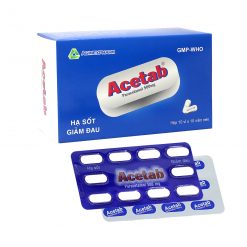
1, 2, 3, 5, 6, 8, 10, 12, 15, 18, 20-blister box x 10 tablets.
1-bottle box x 30, 50, 60, 100 tablets.
Bottle contains 200, 300, 500 tablets.
Storage conditions, shelf life, quality specification of the medicine:
Storage conditions: Protect form humidity and light, below 300C.
Shelf life: 36 months from the manufacture date.
Quality specification: In house.
D1402003401