Indications:
- As an adjunct to diet when response to diet and other nonpharmacological treatments (e.g., exercise, weight reduction) is inadequate in patients with primary hypercholesterolaemia (type IIa including heterozygous familial hypercholesterolaemia) or mixed dyslipidaemia (type IIb).
- As an adjunct to diet when response to diet and other nonpharmacological treatments (e.g. exercise, weight reduction) is inadequate in patients with primary hypercholesterolaemia (type IIa), mixed dyslipidaemia (type IIb), hypertriglyceridemia (type IV).
- As an adjunct to diet therapy in male and female adolescents from 10 to 17 years with heterozygous familial hypercholesterolemia (girls must be at least 1 year postmenarche) if after an adequate trial of diet therapy the following findings are present: LDL-C > 190 mg/dL or > 160 mg/dL and there is a positive family history of premature cardiovascular disease (CVD) or two or more other CVD risk factors.
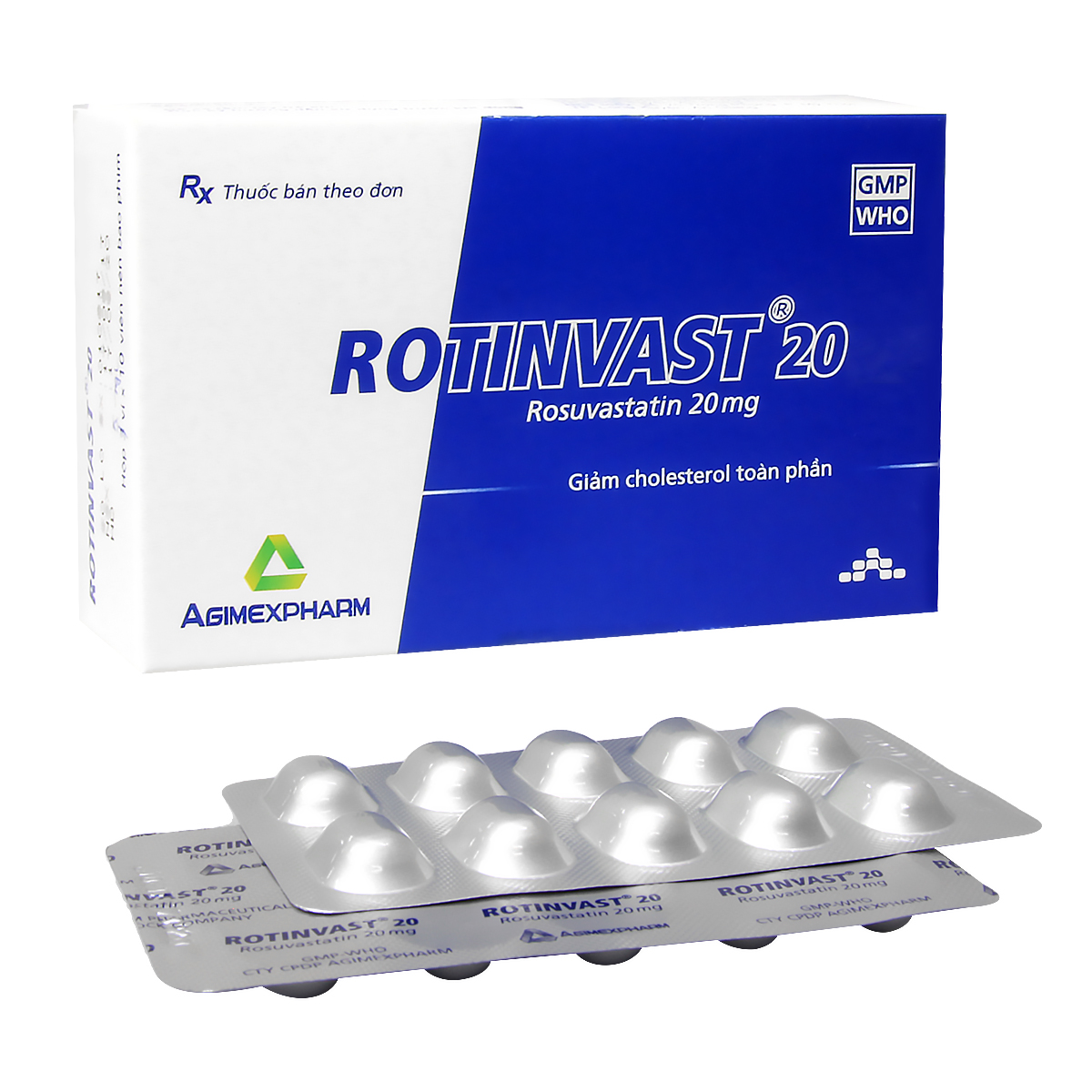
- Homozygous familial hypercholesterolemia: Rotinvast is indicated as adjunctive therapy to other lipid-lowering treatments (e.g., LDL apheresis) or alone if such treatments are unavailable to reduce LDL-C, Total-C, and ApoB.
- Slowing of the progression of atherosclerosis: Rosuvastatin is indicated as adjunctive therapy to diet to lower Total-C and LDL-C to target levels.
Dosage and method of administration:
- Prior to initiating the treatment the patient should be placed on a standard cholesterol lowering diet that should continue during treatment. The dose should be individualised according to the goal of therapy and patient response, using current consensus guidelines.
- The recommended starting dose is 5 mg or 10 mg orally once daily and most patients respond to this initial dose. Dose adjustments should be gradually increased to 20 mg at intervals of 4 weeks if necessary.
- Pharmacokinetic studies in Asian populations conducted in the US show an approximate two fold elevation in median exposure to rosuvastatin compared with Caucasian patients. Therefore, starting dose of 5 mg should be considered when administering rosuvastatin to Asian patients.
- Rosuvastatin 40 mg should only be used in patients with severe hypercholesterolaemia at high cardiovascular risk, who do not achieve their treatment goal on 20 mg. These patients should be monitored closely. However, it should not be administered to patients with high risk of muscular disease, including those taking fibrates and Asian subjects.
- Homozygous Familial Hypercholesterolemia.
The recommended starting dose of rosuvastatin is 20 mg once daily. Response to therapy should be estimated from preapheresis LDL-C levels.
- In patients 10 to 17 years of age with heterozygous familial hypercholesterolemia.
- The usual dose range is 5 to 20 mg orally once daily. Maximum dose is 20 mg daily. Doses should be individualized according to the recommended goal of therapy. Dose adjustments should be made at intervals of 4 weeks or more.
- For patients with severe renal impairment (CrCl < 30 mL/min/1.73 m²) not on hemodialysis, dosing of rosuvastatin should be started at 5 mg once daily and not exceed 10 mg once daily.
- Rosuvastatin may be given at any time of day, with or without food.
- Adverse drug reactions must be monitored, particularly those affecting the muscular system.
- Rosuvastatin should be used with caution and dose adjustment should be considered when it is combined with HIV and HCV protease inhibitors:
- Atazanavir; atazanavir plus ritonavir; lopinavir plus ritonavir, the dose of rosuvastatin should be limited to 10 mg once daily.
Contraindications:
- Patients with a known hypersensitivity to rosuvastatin or any component of this product.
- Patients with activeliver disease, which may include unexplained persistent elevations of hepatic transaminase levels.
- Patients with myopathy.
- Women who are pregnant or may become pregnant not using appropriate contraceptive measures. Because HMG-CoA reductase inhibitors decrease cholesterol synthesis and possibly the synthesis of other biologically active substances derived from cholesterol, rosuvastatin may cause fetal harm.
- Nursing mothers: Because another drug in this class passes into breast milk, and because HMG-CoA reductase inhibitors have the potential to cause serious adverse reactions in nursing infants. A decision should be made whether to discontinue nursing or discontinue rosuvastatin.
Precautions:
- Tell your doctor right away if there is any sign and symptom of muscle pain, fatigue, fever, dark urine, nausea or vomiting during treatment with rosuvastatin.
- Renal effects
- Proteinuria, detected by dipstick testing and mostly tubular in origin, has been observed in patients treated with higher doses of rosuvastatin, in particular 40mg, where it was transient or intermittent in most cases. Proteinuria has not been shown to be predictive of acute or progressive renal disease. An assessment of renal function should be considered during routine follow-up of patients treated with a dose of 40mg.
- Skeletal muscle effects
- Like other HMG-CoA reductase inhibitors, the effects on skeletal muscle such as myalgia and uncomplicated myopathy and very rare cases of rhabdomyolysis, sometimes related to kidney damage, has been reported in patients treated with rosuvastatin.
- Skeletal muscle effects:As with other HMG-CoA reductase inhibitors, cases of myopathy and rhabdomyolysis with acute renal failure secondary leading to myoglobinuria have been reported with rosuvastatin. These risks can occur at any dose level, but are increased at the highest dose (40 mg).
- Coadministration of some other lipid-lowering therapies (fibrates or niacin), gemfibrozil, cyclosporine, lopinavir/ritonavir, or atazanavir/ritonavir may increase the risk of myopathy.
- Creatine kinase measurement (CK).
- Creatine kinase (CK) should be considered in cases:
- Prior to initiating statin therapy with statin, CK test should be exercised in the following cases:Impaired renal function, hypothyroidism, individual or familial history of hereditary myopathy, past history of myopathy with statin or fibrates, history of hepatic disease and/or excessive intake of alcohol, elderly (> 70 years) with risk factors of rhabdomyolysis, potential drug interactions and several specific populations. In such cases, the relative benefit/risk should be considered and rosuvastatin-treated patients should be clinically observed. The therapy should not be started with rosuvastatin if the CK level is more than 5 times ULN.
- During treatment with statin, patients should be advised to inform promptly signs of myopathy such as myalgias, stiff muscle, muscle weakness etc. If these symptoms occur, CK tests should be performed to suggest appropriate interventions.
- Creatine kinase (CK) should not be measured following strenuous exercise or in the presence of a plausible alternative cause of CK increase which may confound interpretation of the result. If CK levels are significantly elevated at baseline (>5xULN) a confirmatory test should be carried out within 5-7 days. If the repeat test confirms a baseline CK >5xULN, treatment should not be started.
- Before treatment rosuvastatin.
- As with other HMG-CoA reductase inhibitors, rosuvastatin should be used with caution in patients with predisposing factors for myopathy/rhabdomyolysis.
- Renal impairment.
- Personal or family history of hereditary muscular disorders.
- Previous history of muscular toxicity with another HMG-CoA reductase inhibitor or fibrate.
- Alcohol abuse
- Over 70 years old
- Situations where an increase in plasma levels may occur.
- In these patients both the potential benefits and harms should be considered and clinical monitoring of rosuvastatin is recommended. If CK levels are significantly elevated at baseline (>5xULN) treatment should not be started.
- While on rosuvastatin
- Patients should be asked to report inexplicable muscle pain, weakness or cramps immediately, particularly if associated with malaise or fever. CK levels should be measured in these patients. Therapy should be discontinued if CK levels are markedly elevated (>5xULN) or if muscular symptoms are severe and cause daily discomfort (even if CK levels are ≤5xULN). If symptoms resolve and CK levels return to normal, then consideration should be given to re-introducing rosuvastatin or an alternative HMG-CoA reductase inhibitor at the lowest dose with close monitoring
- Routine monitoring of CK levels in asymptomatic patients is not warranted.
- In clinical trials there was no evidence of increased skeletal muscle effects in the small number of patients dosed with rosuvastatin and concomitant therapy. However, an increase in the incidence of myositis and myopathy has been seen in patients receiving other HMG-CoA reductase inhibitors together with fibric acid derivatives including gemfibrozil, ciclosporin, nicotinic acid, azole antifungals, protease inhibitors and macrolide antibiotics. Gemfibrozil increases the risk of myopathy when given concomitantly with some HMG-CoA reductase inhibitors. Therefore, the combination of rosuvastatin and gemfibrozil is not recommended. The benefit of further alterations in lipid levels by the combined use of rosuvastatin with fibrates or niacin should be carefully weighed against the potential risks of such combinations.
- Rosuvastatin should not be used in any patient with an acute, serious condition suggestive of myopathy or predisposing to the development of renal failure secondary to rhabdomyolysis (e.g., sepsis, hypotension, major surgery, trauma, severe metabolic, endocrine and electrolyte disorders; or uncontrolled seizures)
- Liver effects.
- As with other HMG-CoA reductase inhibitors, rosuvastatin should be used with caution in patients who consume excessive quantities of alcohol and/or have a history of liver disease.
- It is recommended that liver function tests be performed before and at 3 months following
the initiation of rosuvastatin therapy and any elevation of dose. Rosuvastatin should be discontinued or the dose reduced if the level of serum transaminases is greater than 3 times the upper limit of normal. - In patients with secondary hypercholesterolaemia caused by hypothyroidism or nephrotic syndrome, the underlying disease should be treated prior to initiating therapy with rosuvastatin.
- Race
Pharmacokinetic studies, based on time and concentrations, have demonstrated an approximate 2-fold elevation in median exposure (AUC and Cmax) in Asian subjects when compared with a Caucasian control group.
Interactions:
- Risk of muscular injury may be increased when rosuvastatin is used concurrently with: Gemfibrozil, other cholesterol-lowering medicines, such as fibrates, high dose of niacin (> 1g per day), Colchicine.
- Co-administration of serum lipid-lowering statin with HIV protease inhibitors as well as the hepatitis C protease inhibitors may increase the risk of muscular injury, particularly rhabdomyolysis, nephrotic syndrome leading to renal failure and death.
. When rosuvastatin was co-administered with cyclosporine, rosuvastatin mean AUC were increased 7-fold, compared with healthy volunteers. Concomitant administration did not affect plasma concentrations of ciclosporin.
- As with other HMG – CoA reductase inhibitors, starting rosuvastatin treatment or increasing the dose in patients taking coumarin anticoagulants and rosuvastatin concomitantly may result in clinically significant rises in INR. Rosuvastatin discontinuation or dose reduction may reduce INR. In there cases, INR should be monitored.
- Gemfibrozil: As with other HMG – CoA reductase inhibitors, concomitant use of rosuvastatin and gemfibrozil resulted in a 2-fold increase in rosuvastatin Cmax and AUC.The combination of rosuvastatin and gemfibrozil should be avoided. If used together the dose of rosuvastatin should not exceed 20 mg once daily.
- Antacids: The simultaneous dosing of rosuvastatin with an antacid suspension containing aluminium and magnesium hydroxide resulted in a decrease in rosuvastatin plasma concentration of approximately 50%. This effect was mitigated when the antacid was given 2 hours after rosuvastatin. The clinical relevance of this interaction has not been known.
- Erythromycin: Concomitant use of rosuvastatin and erythromycin resulted in a 20 % decrease in AUC (0-t) and a 30 % decrease in Cmax of rosuvastatin. This interaction may be due to the increase in gut motility caused by erythromycin.
- Oral contraceptive/hormone replacement therapy (HRT): Concomitant use of rosuvastatin and an oral contraceptive resulted in an increase in ethinyl estradiol and norgestrel AUC of 26% and 34%, respectively. These increased plasma levels should be considered when selecting oral contraceptive doses. There are no pharmacokinetic data available in subjects taking concomitant rosuvastatin and HRT and therefore a similar effect cannot be excluded. However, the combination has been extensively used in women in clinical trials and was well tolerated.
- Other medicines:
- Based on data from specific interaction studies no clinically relevant interaction with digoxin or fenofibrate is expected.
- Cytochrome P450 enzymes: Results from in vitro and in vivo studies show that rosuvastatin is neither an inhibitor nor an inducer of cytochrome P450 In addition, rosuvastatin is a poor substrate for these isoenzymes. No clinically significant interactions have been observed between rosuvastatin and either fluconazole (an inhibitor of CYP2C9 and CYP3A4) or ketoconazole (an inhibitor of CYP2A6 and CYP3A4). Concomitant administration of itraconazole (an inhibitor of CYP3A4) and rosuvastatin resulted in a 28% increase in AUC of rosuvastatin. This increase is not considered to be clinically significant. So, metabolism mediated by cytochrome P450 are not effect to drug interactions.
Pregnency and lactation:
- Rosuvastatin is contraindicated in pregnant women and nursing mothers.
- Women of child bearing potential should use appropriate contraceptive measures.
- Since cholesterol and other products of cholesterol biosynthesis are essential for the development of the foetus, the potential risk from inhibition of HMG-CoA reductase outweighs the advantage of treatment during pregnancy. Animal studies show that there were limited evidences of reproductive toxicity. If a patient becomes pregnant while taking rosuvastatin, the treatment should be discontinued immediately.
- Rosuvastatin is excreted in the milk of rats. There are no data with respect to excretion in human breast milk.
Undesirable effects:
- The adverse reactions of rosuvastatin are generally mild and transient. In controlled clinical trials, less than 1.4% of rosuvastatin-treated patients discontinued due to adverse reactions.
- Frequency of side effects:
- Immune system disorders: Rare: Hypersensitivity reactions including angioedema.
- Nervous system disorders: Common: Headache, dizziness.
- Gastrointestinal disorders: Common: Constipation, nausea, abdominal pain.
- Skin and subcutaneous tissue disorders: Rare: Pruritis, rash, urticaria.
- Musculoskeletal and connective tissue disorders:
- Common: Myalgia.
- Rare: Myopathy (including myositis), rhabdomyolysis.
- General disorders: Common: Asthenia.
- As with other HMG-CoA reductase inhibitors, the incidence of adverse drug reactions tends to be dose dependent.
- Renal effects: Proteinuria, detected by dipstick testing and mostly tubular in origin, has been observed in patients treated with rosuvastatin. Shifts in urine protein from none or trace to ++ or more were seen in < 1% of patients at some time during treatment with 10 and 20 mg, and in approximately 3% of patients treated with 40 mg. A minor increase in shift from none or trace to + was observed with the 20 mg dose. In most cases, proteinuria decreases or disappears spontaneously on continued therapy and the development of proteinuria is not predictive sign of acute or progressive renal disease.
- Skeletal muscle effects: As with other HMG – CoA reductase inhibitors there have been case reports of myalgia and rhabdomyolysis associated with acute renal failure secondary leading to myoglobinuria.
- A dose-related increase in CK levels has been observed in a small number of patients taking rosuvastatin; the majority of cases were mild, asymptomatic and transient. If CK levels are elevated (> 5xULN), treatment should be discontinued.
- Liver effects: As with other HMG-CoA reductase inhibitors, a dose-related increase in transaminases has been observed in a small number of patients taking rosuvastatin; the majority of cases were mild, asymptomatic and transient.
- Cognitive impairment (e.i. amnesia, confusion)
- Hyperglycemia.
- Increased HbA1c.
- Inform your physician about undesirable effects encountered when using this medicine.
Pharmacodynamic properties:
- Rosuvastatin is a selective and competitive inhibitor of HMG-CoA reductase, the enzyme catalyzes the conversion of 3-hydroxy-3-methylglutaryl coenzyme A to mevalonate, a precursor for cholesterol. The primary site of action of rosuvastatin is the liver, the target organ for cholesterol lowering.
- Rosuvastatin increases the number of hepatic LDL receptors on the cell-surface to enhance uptake and catabolism of LDL and it inhibits the hepatic synthesis of VLDL, thereby reducing the total number of VLDL and LDL particles.
- Pharmacodynamic effects
- Rosuvastatin reduces elevated LDL-cholesterol, total cholesterol and triglycerides and increases HDL-cholesterol. It also lowers ApoB, non HDL-C, VLDL-C, VLDLTG and increases ApoA-I (see Table 1). Rosuvastatin also lowers the LDL-C/HDL-C, total C/HDL-C and non HDLC/HDL-C and the ApoB/ApoA-I ratios.
Table 1. Dose response in patients with primary hypercholesterolaemia.
(Type IIa and IIb) (adjusted mean percent change from baseline).
| Dose | Number | LDL-C | Total-C | HDL-C | TG | Non HDL-C | ApoB | ApoA-I |
| Placebo | 13 | -7 | -5 | 3 | -3 | -7 | -3 | 0 |
| 5 | 17 | -45 | -33 | 13 | -35 | -44 | -38 | 4 |
| 10 | 17 | -52 | -36 | 14 | -10 | -48 | -42 | 4 |
| 20 | 17 | -55 | -40 | 8 | -23 | -51 | -46 | 5 |
| 40 | 18 | -63 | -46 | 10 | -28 | -60 | -54 | 0 |
- A therapeutic effect is obtained within 1 week following treatment initiation and 90% of maximum response is achieved in 2 weeks. The maximum response is usually achieved by 4 weeks and is maintained after that.
- Clinical efficacy and safety
- Rosuvastatin is effective in adults with hypercholesterolaemia, with and without hypertriglyceridaemia, regardless of race, sex, or age and in special populations such as diabetics, or patients with familial hypercholesterolaemia.
- From pooled phase III data, rosuvastatin has been shown to be effective at treating the majority of patients with type IIa and IIb hypercholesterolaemia (mean baseline LDLC about 4.8 mmol/l) to recognised European Atherosclerosis Society (EAS; 1998) guideline targets; about 80% of patients treated with 10 mg reached the EAS targets for LDL-C levels (< 3 mmol/l).
- In a large study, 435 patients with heterozygous familial hypercholesterolaemia were given rosuvastatin from 20 mg to 80 mg in a force-titration design. All doses showed a beneficial effect on lipid parameters and treatment to target goals. Following titration to a daily dose of 40 mg (12 weeks of treatment), LDL-C was reduced by 53%. 33% of patients reached EAS guidelines for LDL-C levels (< 3 mmol/l).
- In a force-titration, open label trial, 42 patients with homozygous familial hypercholesterolaemia were evaluated for their response to rosuvastatin 20-40 mg. In the overall population, the mean LDL-C reduction was 22%.
- In clinical studies with a limited number of patients, rosuvastatin has been shown to have additive efficacy in lowering triglycerides when used in combination with fenofibrate and in increasing HDL-C levels when used in combination with niacin.
- Rosuvastatin has not been proven to prevent associated complications of lipid abnormalities, such as coronary artery disease because studies on reducing mortality and morbidity rate when using rosuvastatin have not yet been completed.
Pharmacokinetic properties:
- Absorption:
Maximum rosuvastatin plasma concentrations are achieved approximately 5 hours after oral administration. The absolute bioavailability is approximately 20%.
- Distribution:
Rosuvastatin is taken up extensively by the liver which is the primary site of cholesterol synthesis and LDL-C clearance. The volume of distribution of rosuvastatin is approximately 134 L. Approximately 90% of rosuvastatin is bound to plasma proteins, mainly to albumin.
- Metabolism:
Rosuvastatin undergoes limited metabolism (approximately 10%). In vitro metabolism studies using human hepatocytes indicate that rosuvastatin is a poor substrate for cytochrome P450 based metabolism. CYP2C9 was the principal isoenzyme involved, with 2C19, 3A4 and 2D6 involved to a lesser extent. The main metabolites identified are the N-desmethyl and lactone metabolites. The N-desmethyl metabolite is approximately 50% less active than rosuvastatin whereas the lactone form is considered clinically inactive. Rosuvastatin accounts for greater than 90% of the circulating HMG-CoA reductase inhibitor activity.
- Elimination:
Approximately 90% of the rosuvastatin dose is excreted unchanged in the faeces (consisting of absorbed and nonabsorbed active substance) and the remaining part is excreted in urine. Approximately 5% is excreted unchanged in urine. The plasma elimination half-life is approximately 19 hours. The elimination half-life does not increase at higher doses. The geometric mean plasma clearance is approximately 50 litres/hour (coefficient of variation 21.7%). As with other HMGCoA reductase inhibitors, the hepatic uptake of rosuvastatin involves the membrane transporter OATP-C. This transporter is important in the hepatic elimination of rosuvastatin.
- Linearity:
Systemic exposure of rosuvastatin increases in proportion to dose. There are no changes in pharmacokinetic parameters following multiple daily doses.
- Special populations:
- Age and sex: There was no clinically relevant effect of age or sex on the pharmacokinetics of rosuvastatin in adults.
- Race: Pharmacokinetic studies show an approximate 2-fold elevation in median AUC and Cmax in Asian subjects (Japanese, Chinese, Filipino, Vietnamese and Koreans) compared with a Caucasian control group.The influence of genetic factors and environmental changes is unidentified. A population pharmacokinetic analysis revealed no clinically relevant differences in pharmacokinetics between Caucasian and Black groups.
- Renal insufficiency:
- In a study in subjects with varying degrees of renal impairment, mild to moderate renal disease had no influence on plasma concentration of rosuvastatin or the N-desmethyl metabolite. Subjects with severe impairment (CrCl < 30 ml/min) had a 3-fold increase in plasma concentration and a 9-fold increase in the N-desmethyl metabolite concentration compared to healthy volunteers. Steady-state plasma concentrations of rosuvastatin in subjects undergoing haemodialysis were approximately 50% greater compared to healthy volunteers.
- Hepatic insufficiency:
- In a study with subjects with varying degrees of hepatic impairment there was no evidence of increased exposure to rosuvastatin, based on concentration and time, in subjects with Child-Pugh scores equal to 7. However, two subjects with Child-Pugh scores of 8 and 9 showed an increase in systemic exposure of at least 2-fold compared to subjects with lower Child-Pugh scores. There is no experience in subjects with ChildPugh scores above 9.
Overdose and treatment
There is no specific treatment in the event of overdose. In the event of overdose, the patient should be treated symptomatically and supportive measures instituted as required. Liver function and CK levels should be monitored. Haemodialysis is unlikely to be of benefit.